
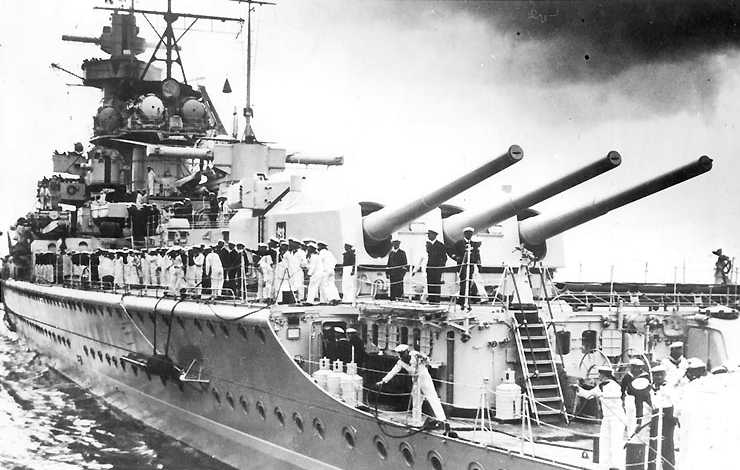
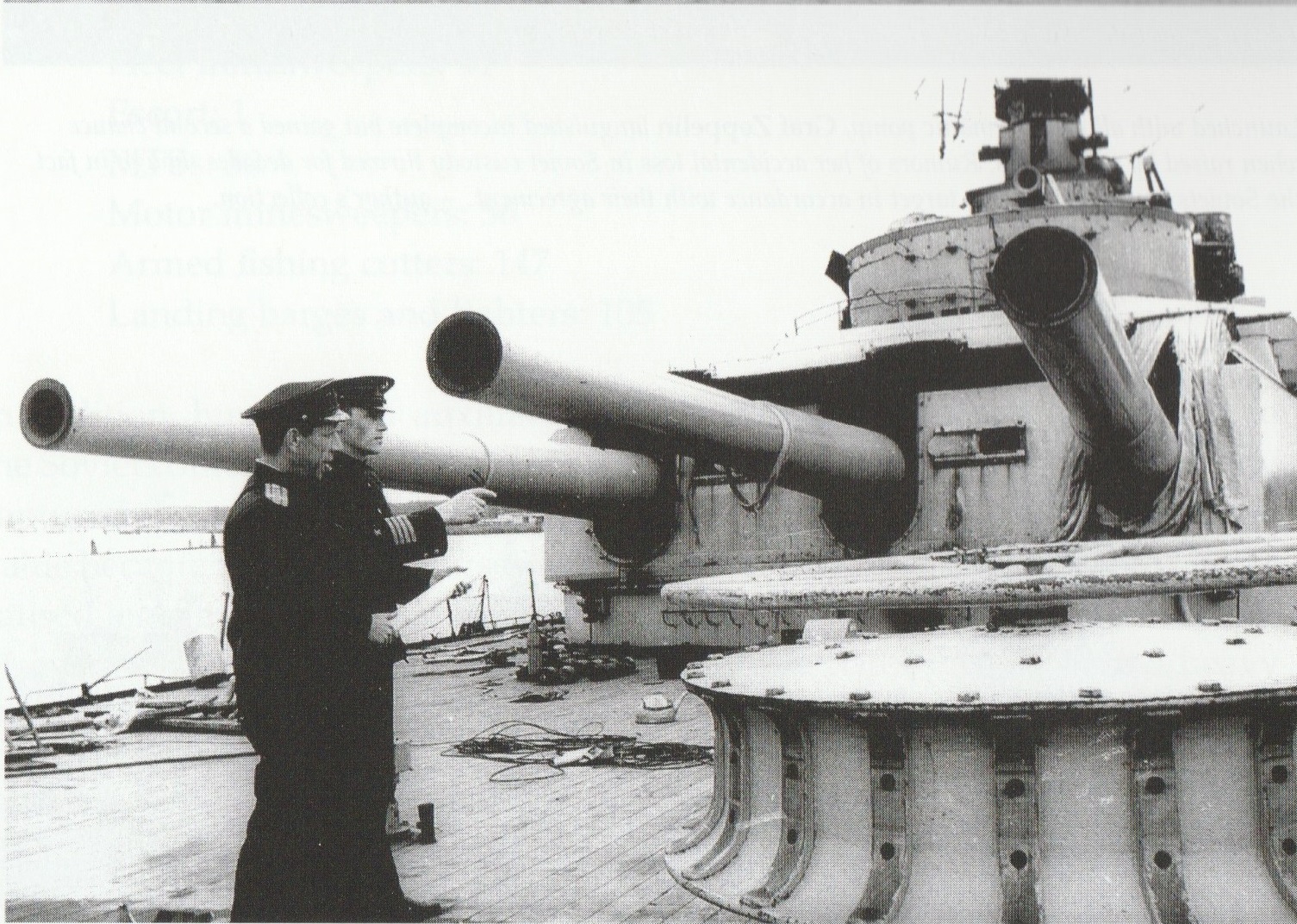
This weapon was used on the famous Panzerschiffes or "Pocket Battleships" Lützow (ex-Deutschland), Admiral Scheer and Admiral Graf Spee. The turrets were fitted with RPC only for elevation.
The shells used for these guns had inferior ballistic characteristics when compared to those for the later 28 cm SK C/34.
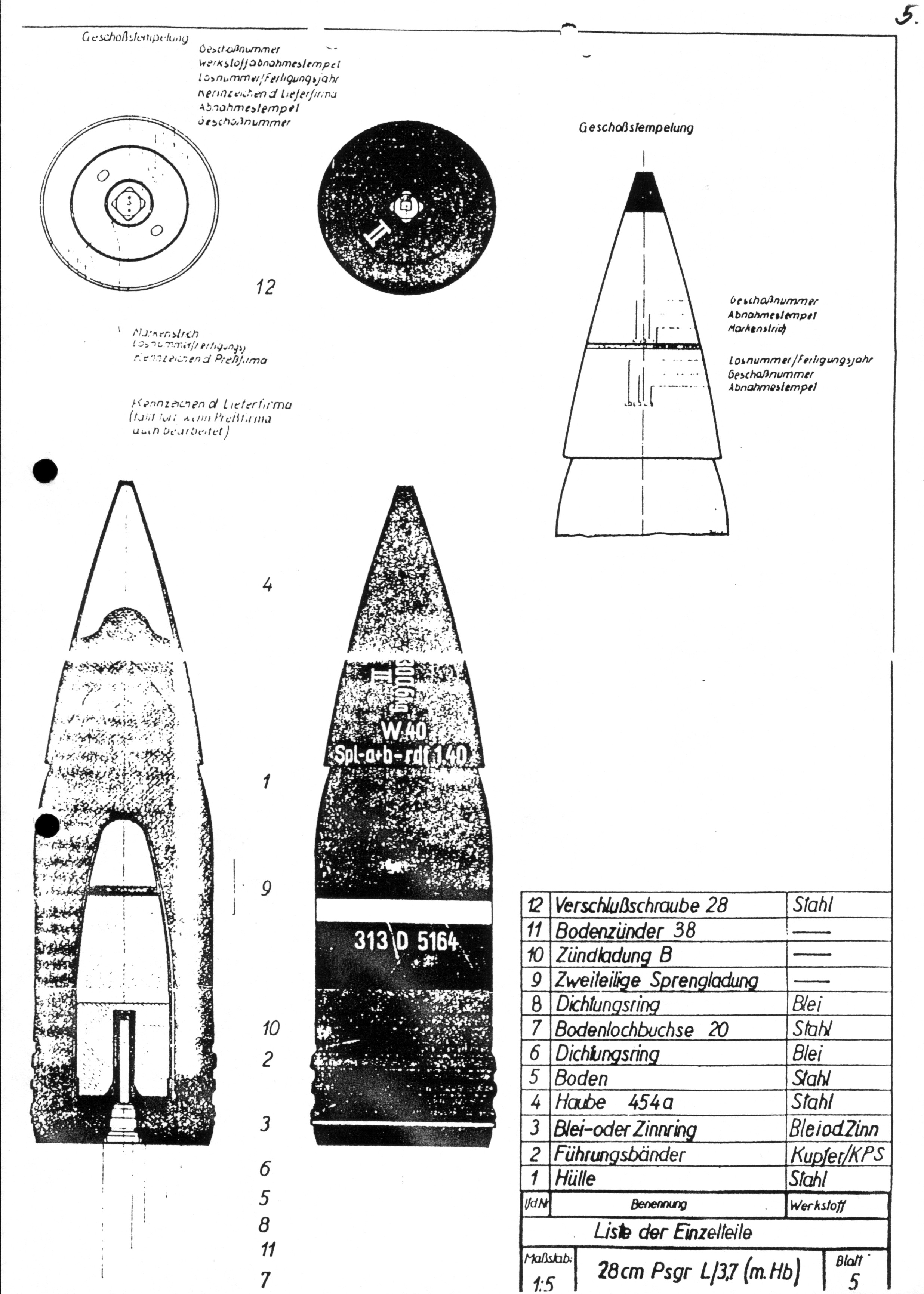
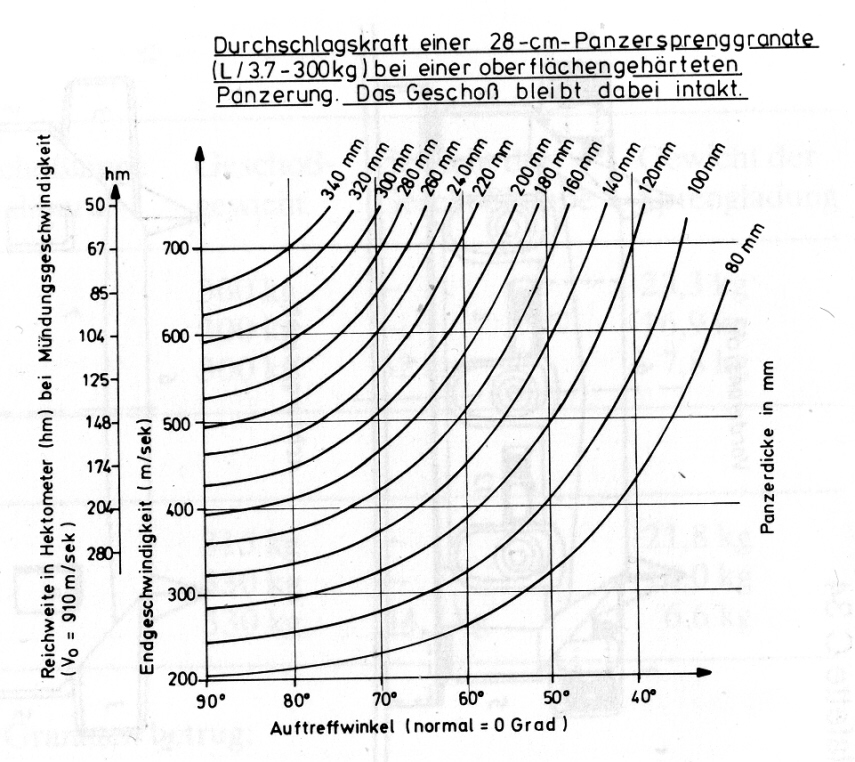
"These guns had 28 cm Psgr.m.K. L/3,7 armor-piercing projectiles, which were more or less a 'warmed-over' Krupp 28 cm Psgr.m.K. L/3,4 post-1911 World War I AP projectiles with a slight decrease in weight, a blunter nose, a thicker AP cap and a more pointed windscreen to increase range. They were still just as poor at oblique-angle impact as their older brothers, having the same '0.5-caliber-KC-penetration-at-500 mps-and-30°-obliquity' specification as did the pre-World War I design. Both the older projectile and this newer one barely met that requirement. These guns also had a very blunt-nosed SAP-type Common projectile (Spgr.m.Bdz) with only light AP penetration ability, though the blunt nose shape gave it good thin-deck (British and French 'Treaty' cruisers) penetration at long range, which was probably what it was for." - Nathan Okun
The construction of this weapon was similar to that of the 28 cm SKC/34, but the jacket was in one piece.
All German 28 cm guns had an actual bore diameter of 28.3 cm (11.1").
| Designation | 28 cm/52 (11") SK C/28 |
|---|---|
| Ship Class Used On | Lützow (ex-Deutschland) Class |
| Date Of Design | 1928 |
| Date In Service | 1930 |
| Gun Weight | 106,262 lbs. (48,200 kg) |
| Gun Length oa | 583.27 in (14.815 m) |
| Bore Length | 547.4 in (13.905 m) |
| Rifling Length | 449.25 in (11.411 m) |
| Grooves | (80) 0.128 in deep x 0.265 in (3.25 mm x 6.72 mm) |
| Lands | 0.173 in (4.4 mm) |
| Twist | Increasing RH 1 in 50 to 1 in 35 |
| Chamber Volume | 9,764 in3 (160 dm3) |
| Rate Of Fire | 2.5 rounds per minute |
| Type | Cartridge - Bag | |
|---|---|---|
| Projectile Types and Weights 1 | APC L/3,7: 661.4 lbs (300 kg)
HE L/4,2 base fuze: 661.4 lbs. (300 kg) HE L/4,2 nose fuze 2: 661.4 lbs. (300 kg) HE L/4,2 nose fuze AA 3: about 563.0 lbs. (296 kg) |
|
| Bursting Charge 4 | APC L/3,7 | G: 18.40 lbs. (8.346 kg) or 21.44 lbs. (9.724 kg)
S: 17.30 lbs. (7.845 kg) or 19.67 lbs. (8.922 kg) TNT 5 |
| HE L/4,2 base fuze | G: 39.46 lbs. (17.900 kg) or 40.59 lbs. (18.410 kg)
S: 37.34 lbs. (16.935 kg) or 38.47 lbs. (17.450 kg) TNT 6 |
|
| HE L/4,2 nose fuze | G: 55.01 lbs. (24.950 kg) or 54.69 lbs. (24.809 kg)
S: 51.43 lbs. (23.330 kg) or 50.74 lbs. (23.015 kg) TNT 7 |
|
| Projectile Length 8 | APC L/3,7: 41.2 in (104.7 cm)
HE L/4,2 base fuze: 46.8 in (118.8 cm) HE L/4,2 nose fuze: 46.8 in (118.8 cm) |
|
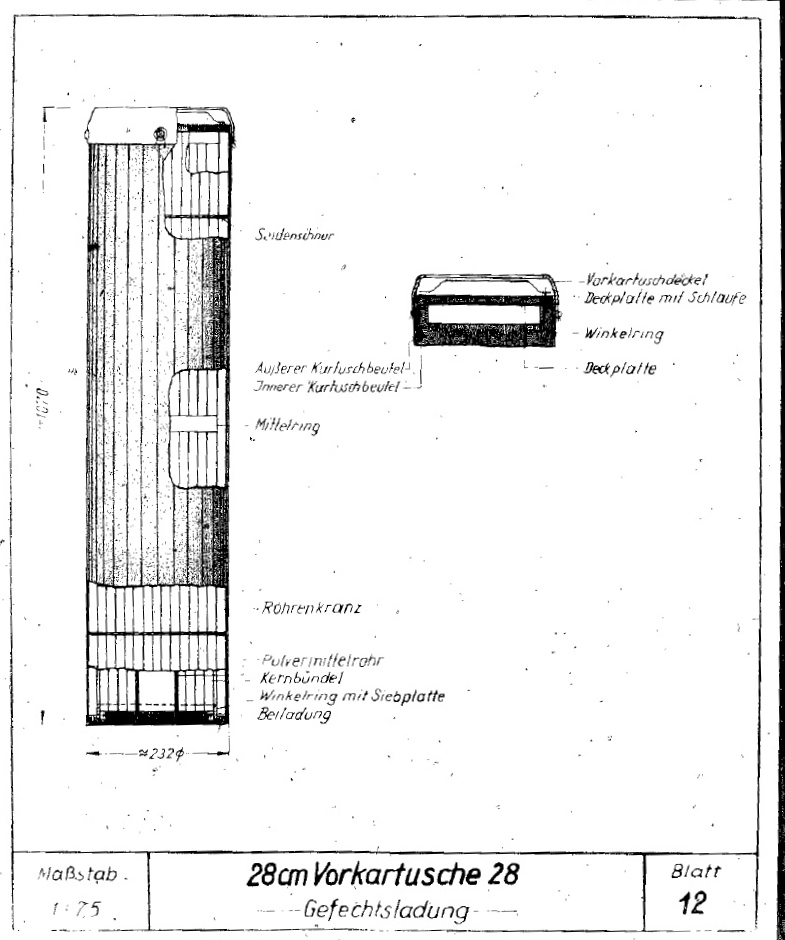
| Propellant Charge 9 10 | Fore Charge: 75.0 lbs. (34.0 kg) RP C/32 (980/970 x 18/10) + (970 x 68/60 Pulvermittelrohr)
Rear Charge: 158.7 lbs. (72.0 kg) RP C/32 (1230/1190 x 18/10) + (1195 x 48/40 Pulvermittelrohr) - or - Fore Charge: 79.4 lbs. (36.0 kg) RP C/38 (980/970 x 16/7,2) + (960 x 68/60 Pulvermittelrohr)
|
|
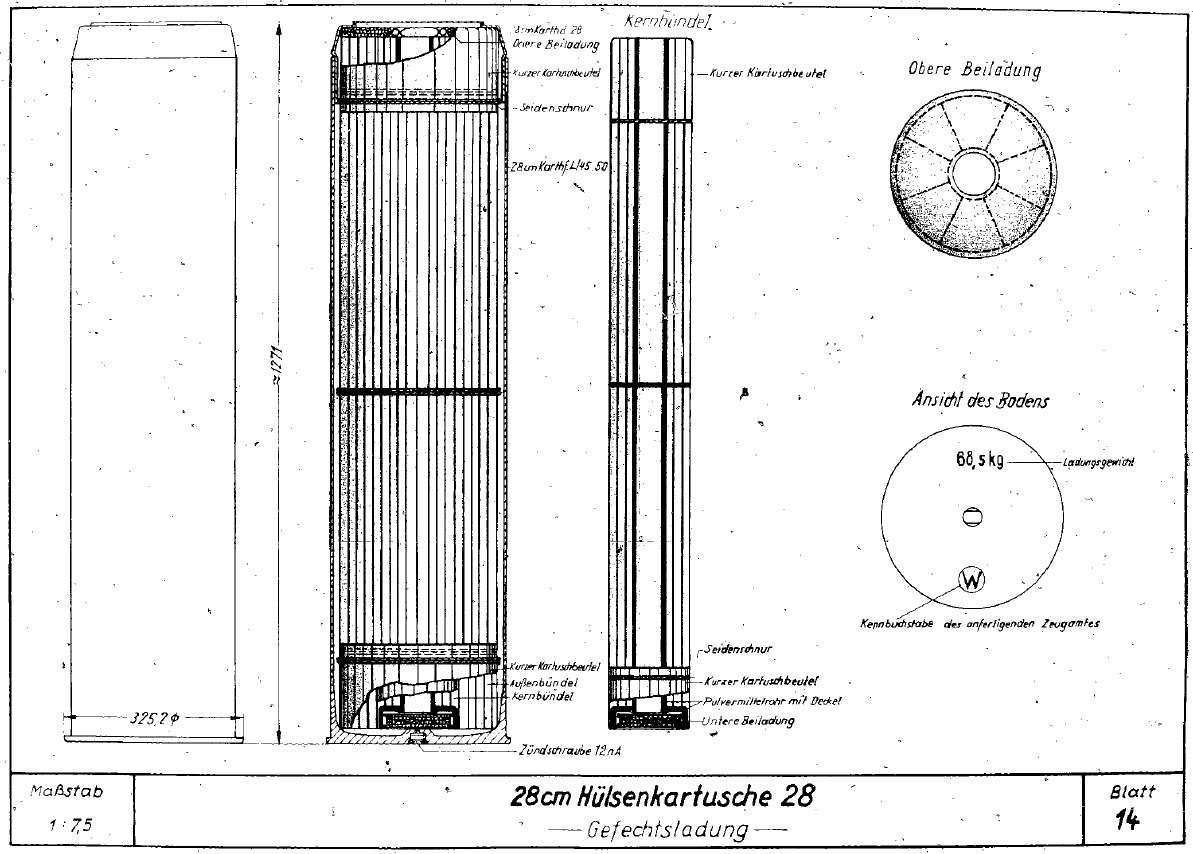
| Cartridge Case Type, Size and Weight 11 | Brass, 283 x 1271 mm, about 99.2 lbs. (45.0 kg) 12 | |
| Muzzle Velocity | 2,986 fps (910 mps) | |
| Working Pressure | 20.3 tons/in2 (3,200 kg/cm2) | |
| Approximate Barrel Life | 340 rounds | |
| Ammunition stowage per gun | 120 rounds 13 14 | |
- ^
Actual German Designations for Projectiles APC L/3,7 28 cm Pzgr. L/3,7 (m.Hb) HE L/4,2 base fuze 28 cm Spgr. L/4,2 Bdz (m.Hb) HE L/4,2 nose fuze 28 cm Spgr. L/4,2 Kz (m.Hb) HE L/4,2 nose fuze AA 28 cm Spgr. L/4,2 Kz (m.Hb) – Haube abgeschraubt - ^German HE Nose Fuzed projectiles with ballistic caps had a rod between the nose of the shell and the fuze to improve performance when striking obliquely. See details on 12.7 cm SK C/34 datapage.
- ^The post-war USN NAVTECMISEU Technical Report #191-45 "Standard German Projectile Fuzes" lists the time fuze Z.Z. S/60 nA as being used on the 28 cm Spgr. L/4,2 Kz (m.Hb) which implicitly means that sometime during the war an AA version of this projectile was issued. The AA projectile was the same as the standard HE Nose Fuze projectile, but had a time fuze in place of the instantaneous impact fuze and did not use the ballistic cap (windshield). These were used at least once by Admiral Scheer during Operation Wunderland in 1942 where they were used to bombard shore installations at Port Dickson at the entrance to the Gulf of Yenisey. They may also have been used during bombardment missions along the Baltic coast by Admiral Scheer and Lützow during 1944 and 1945. This AA projectile was similar to that for the 15 cm/60 (5.9") SK C/25. See Anti-Aircraft Projectiles on that datapage for a sketch.
- ^Burster weights (G = Gesamtgewicht and S = reiner Sprengstoff) and compositions from M.Dv. Nr. 198 which gives two weights for each shell type. This is related to the way that the bursters were packaged in the cavity. Both weights are included here for reference.
- ^The burster for the APC L/4,4 projectile was made from Fp 1 and Fp 15.
- ^The burster for the HE L/4,5 base fuze projectile was made from Fp 1, Fp 5, Fp 10 and Fp 15.
- ^The bursters for the HE L/4,6 nose fuze projectiles were made entirely with Fp 1.
- ^APC and HE ballistic caps had a radius of 8.5 calibers. The tangent of the ballistic cap to the shell body was inclined at 5 degrees, which resulted in a projectile with a short overall length.
- ^These guns, like most large caliber German guns, used a "fore charge" which was propellant in a silk bag, and a "rear charge" which was propellant in a brass case. The brass case helped to seal the breech of the gun.
- ^Fore and rear charges were rammed together.
- ^During World War I the same cartridge case was used for the 28 cm SK L/40, 28 cm SK L/45 and 28 cm SK L/50 guns. During World War II it appears that the same cartridge case was still used for these older guns as well as for the newer 28 cm SKC/28 and 28 cm SKC/34 guns.
- ^The cartridge rim diameter was 320 mm.
- ^This is the design figure. "German Warships 1815-1945" says that the actual outfit ranged from 105 to 120 rounds.
- ^Admiral Graf Spee carried 100 rounds per gun during her war cruise. Her outfit consisted of 200 AP, 200 HE Nose Fuze and 200 HE Base Fuze rounds. Of these, 414 were fired during the Plate River battle - all 200 HE Nose Fuze rounds, 184 HE Base Fuze and 30 AP rounds, leaving her with 170 AP and 16 HE Base Fuze rounds at the close of the action. She scored seven hits and one damaging near miss on HMS Exeter while HMS Ajax received one hit and one glancing blow and HMNZS Achilles escaped with a single damaging near-miss, a total of about 2.7 percent. Although this hit percentage was better than that recorded by the British and New Zealander crews, it was disappointing to the Germans, who - according to Eric Grove - blamed "[Captain] Langsdorff's torpedo officer's tendency to over zigzag" which means that the fire control system needed more time to settle than what was available.
| Elevation | Distance | Striking Velocity | Angle of Fall |
|---|---|---|---|
| 1.9 degrees | 5,470 yards (5,000 m) | 2,467 fps (752 mps) | 2.4 |
| 4.5 degrees | 10,940 yards (10,000 m) | 2,005 fps (611 mps) | 6.0 |
| 8.0 degrees | 16,400 yards (15,000 m) | 1,617 fps (493 mps) | 11.8 |
| 12.5 degrees | 21,870 yards (20,000 m) | 1,335 fps (407 mps) | 21.4 |
| 18.6 degrees | 27,340 yards (25,000 m) | 1,181 fps (360 mps) | 34.2 |
| 26.3 degrees | 32,810 yards (30,000 m) | 1,158 fps (353 mps) | 46.4 |
| 36.4 degrees | 38,280 yards (35,000 m) | 1,247 fps (380 mps) | 56.0 |
| 40.0 degrees | 39,890 yards (36,475 m) | --- | --- |
| Designation | Three-gun Turrets 1a Lützow (ex-Deutschland) (2): Drh LC/28 |
|---|---|
| Weight | 590 tons (600 mt) 2a |
| Elevation | -10 / +40 degrees |
| Elevation Rate | 8 degrees per second |
| Train | -145 / +145 degrees |
| Train Rate | 6 to 7.2 degrees per second |
| Gun recoil | N/A |
| Loading Angle | +2 degrees |
- ^The center gun fired first followed by the wing guns 10 to 20 milliseconds later in order to reduce shell interference.
- ^
Armor thickness for the Graf Spee as given in "German Capital Ships of World War Two" by M.J. Whitley Face Lower 5.5 in (14 cm) KC.s Upper 3.1 in (8.0 cm) KC.s Sides Forward Lower 3.1 in (8.0 cm) KC.s Upper 3.5 in (9.0 cm) KC.s Rear Lower 2.9 in (7.5 cm) KW.s Upper 3.3 in (8.5 cm) KC.s Rear Side Lower 6.7 in (17 cm) N Upper 3.3 in (8.5 cm) KC.s Roof 3.3 in (8.5 cm) KC.s Lützow (ex-Deutschland) and Admiral Scheer had the same protection with the exception of the Lower Rear Side which was 6.0 in (15.2 cm).
- Turrets had electric training, auxiliary elevation, auxiliary hoists but otherwise they were hydraulically powered by two electrically driven pumps in each turret using a water / glycerine pressure medium. Main gun elevation was by hydraulic cylinder driving the elevation arc by a rack and pinion.
- Each gun was served by a shell cage which picked up the charge cage on its way to the gunhouse. The hoists came up between the guns and the shells were transferred to the loading tray by rammers. The shell hoist for the left gun came up between the left gun and the center gun. The other two cages came up between the center and right gun. The charge cage carried the fore charge on the bottom and the main charge on top. The fore charge was loaded by hand and then the main charge rammed in behind it. There were also auxiliary hoists for each gun. The auxiliary hoist for the center gun came up behind the gun and had a tiltable cage. The other auxiliary hoists came up behind and to the side of the guns, with the shells and main charges being transported by overhead gear.
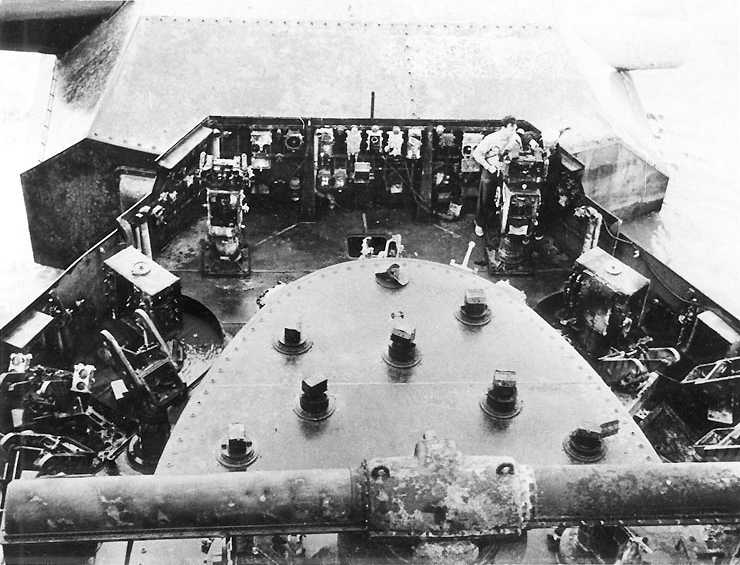
- The width of the gunhouse was smaller than the diameter of the barbette, necessitating armored semi-circular "wings" on the sides of the gunhouse in order to provide protection to the top of the barbette.
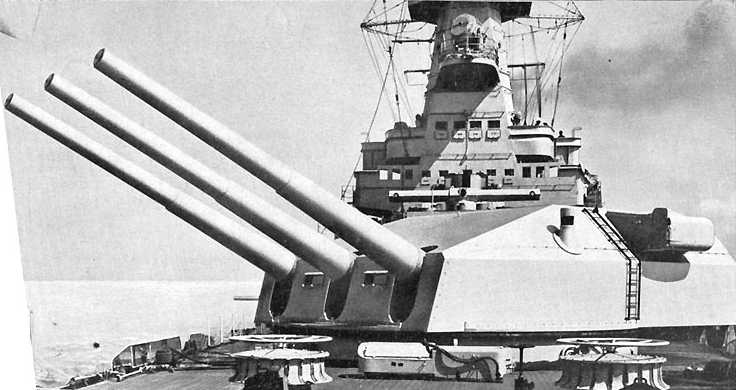
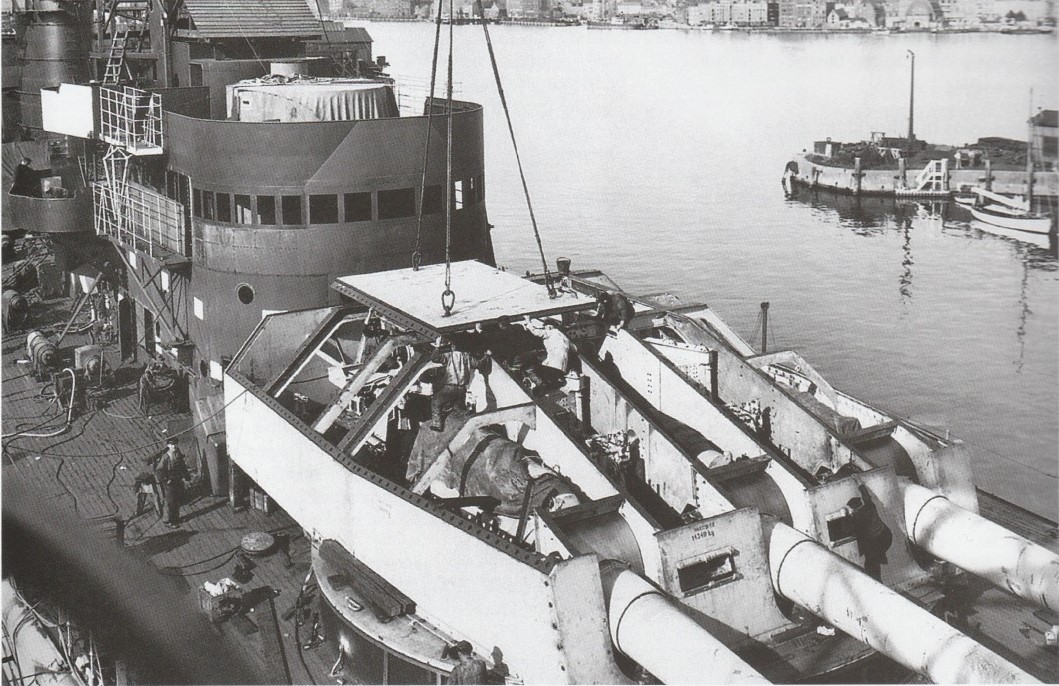
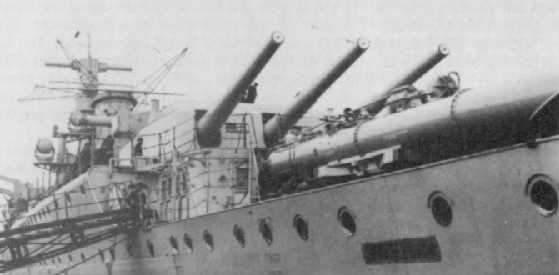
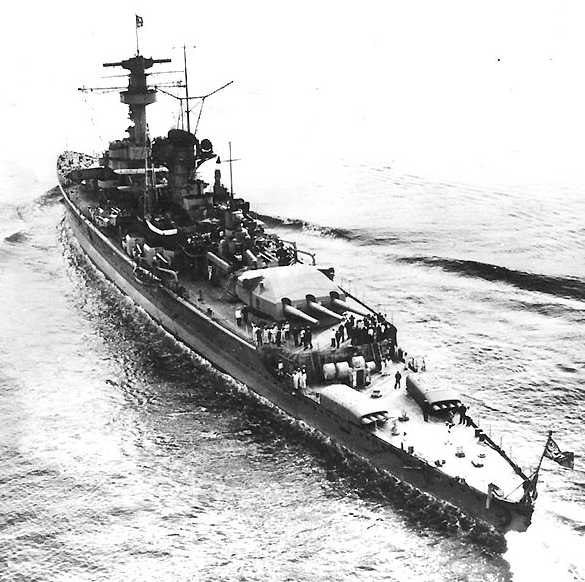
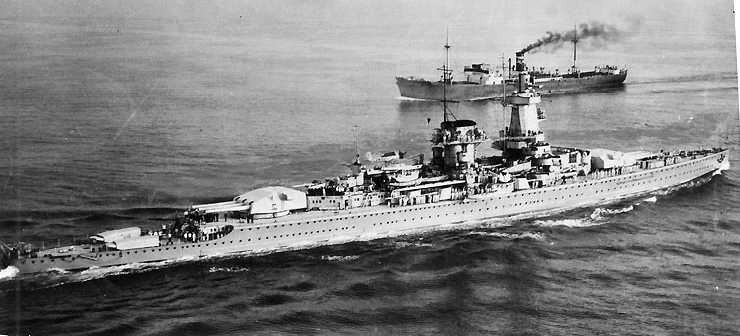
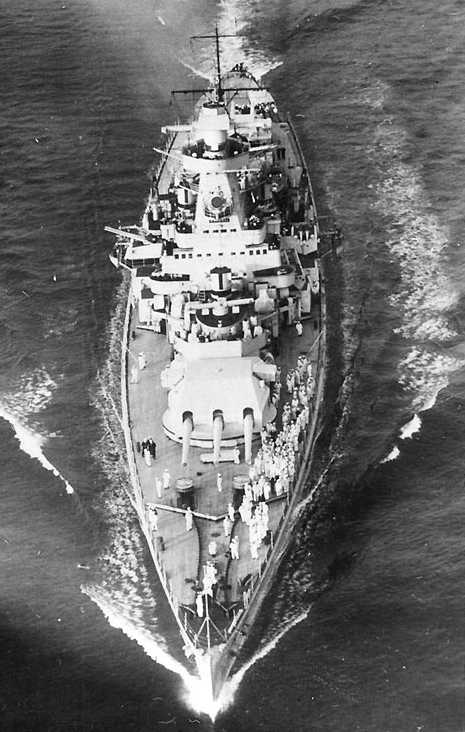
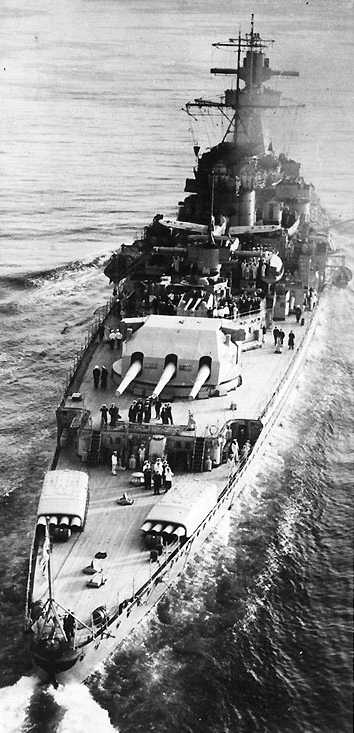
"Naval Weapons of World War Two" by John Campbell
"German Warships 1815-1945" by Erich Gröner
"The Price of Disobedience: The Battle of the River Plate Reconsidered" by Eric Grove
"The Big Gun: Battleship Main Armament 1860-1945" by Peter Hodges
German Naval Guns: 1939 - 1945" by Miroslaw Skwiot
"German Capital Ships of World War Two" by M.J. Whitley
---
"Munitionsvorschriften für die Kriegsmarine - Panzersprenggranaten mit Haube - a) Psgr (m.Hb)" M.Dv. Nr. 190,1A1 by Oberkommando der Kriegsmarine
"Munitionsvorschriften für die Kriegsmarine - Hülsenkartusche" M.Dv. Nr. 190,4A1 by Oberkommando der Kriegsmarine
"Munitionsvorschriften für die Kriegsmarine - Vorkartusche" M.Dv. Nr. 190,4A6 by Oberkommando der Kriegsmarine
"Übersicht über die für die Marinegeschütze und deren Abk K zu verwendende Munition und ihre Einzelteile einschließlich Salut-
und Manöverladungen" M.Dv. Nr. 198 by Oberkommando der Kriegsmarine
---
Special help from Richard Worth, Nathan Okun, Stefan Weniger and Thorsten Wahl
28 December 2008 - Benchmark
02 April 2011 - Added train information
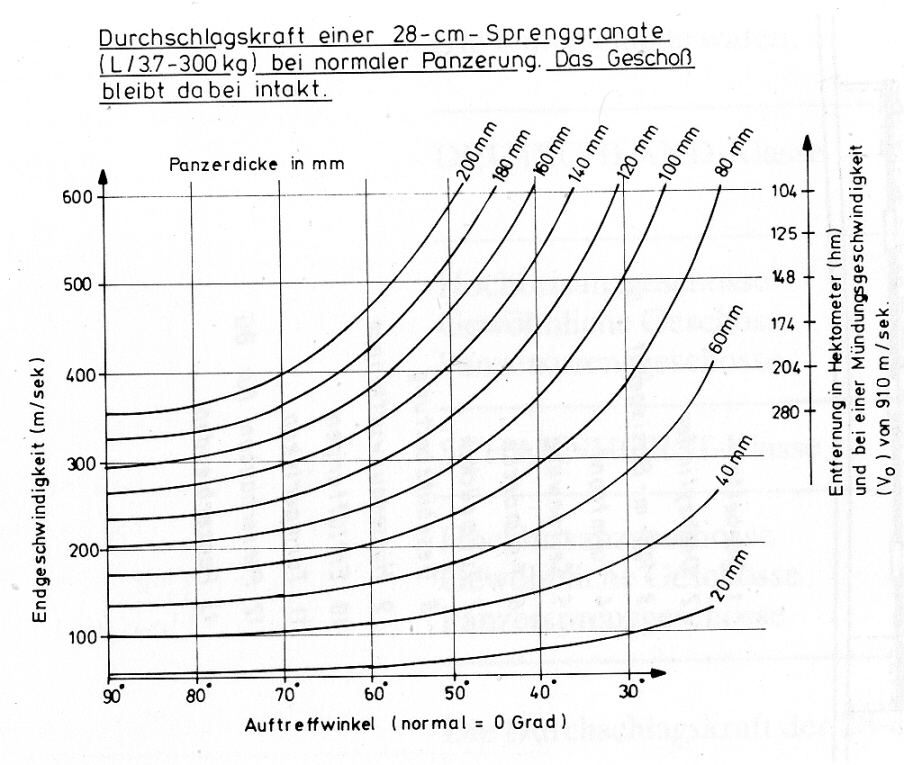
06 December 2014 - Added penetration charts
27 April 2015 - Added Armor thickness information
26 August 2018 - Converted to HTML 5 format and reorganized notes
27 March 2019 - Corrected error, added information to Ammunition Section and added data and sketches from
M.Dv. Nr. 170,47, M.Dv. Nr. 190,1A1, M.Dv. Nr. 190,4A1 and M.Dv. Nr. 190,4A6
25 August 2019 - Added link to AA Projectile section
14 November 2019 - Added comments about use of AA shells by Admiral Scheer and Lützow
24 November 2023 - Added photograph of post-war Lützow
07 June 2024 - Corrected photograph caption
28 August 2024 - Added burster notes and propellant information
01 March 2025 - Minor changes
15 April 2025 - Added propellant information
29 June 2025 - Redid Burster table
02 September 2025 - Corrected photograph ID number