
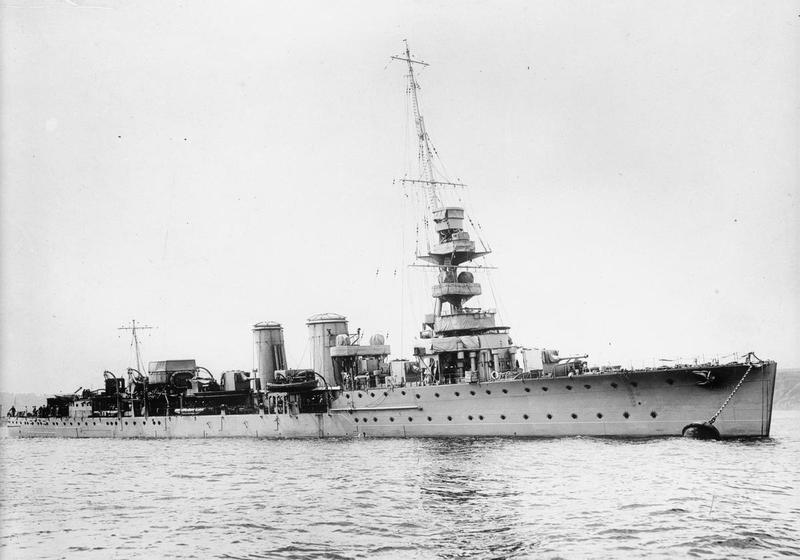
Constructed of inner A tube, A tube, full length wire, full length jacket, breech ring and breech bush which screwed into the A tube. Used a hand-worked Welin breech-block with a "pure couple" mechanism. Mark XIIA had a modified chamber with parallel front end, while the Mark XIIB had a modified chamber with a bore of 5.985" (15.202 cm) in an effort to improve accuracy. Where practical, it was preferred not to mix Mark XIIB with Mark XII or XIIA, but all guns were interchangeable. A total of 463 guns were manufactured for the Royal Navy, of which 431 remained in service as of 1939. Although none of these guns were specifically manufactured for the Army, many were transferred from the Navy during World War II for use in emergency coastal defense batteries.
Actual bore length was 45.11 calibers.
The Mark XX was similar to the Mark XII but had a chamber that was shorter and smaller in volume. This was an attempt to fix an oval wear problem found with the Mark XII. Thirty-seven guns were ordered in 1917, but the order was canceled after trials with the prototype showed that accuracy suffered. The only Mark XX actually completed was converted back to the Mark XII standard.
| Designation | 6"/45 (15.2 cm) BL Mark XII |
|---|---|
| Ship Class Used On | Queen Elizabeth, Royal Sovereign, Arethusa, Birmingham, "C", "D" and "E" cruiser classes
Monitors M.29 to M.33, Abercrombie, Raglan and Picton |
| Date Of Design | 1913 |
| Date In Service | 1914 |
| Gun Weight | 15,428 lbs. (6,998 kg) |
| Gun Length oa | 279.7 in (7.105 m) |
| Bore Length | 270.0 in (6.858 m) |
| Rifling Length | 230.6 in (5.856 m) |
| Grooves | (36) 0.0535 in deep x 0.3759 (1.36 x 9.548 mm) |
| Lands | 0.1477 in (3.752 mm) |
| Twist | Uniform RH 1 in 30 |
| Chamber Volume | 1,770 in3 (29.0 dm3) |
| Rate Of Fire 1 2 | 5 - 7 rounds per minute |
- ^The Rate of Fire figure given above is found in references for British guns of this caliber, but "Warrior to Dreadnought: Warship Development 1860-1905" quotes Jellicoe's 1906 figures for rates of fire for these guns in gunlayers' tests and in battle practice and notes that the latter figures corresponded well to those actually attained by the Japanese at Tsushima:
Gunlayers Test: 12 rounds per minute
Battle Practice: 4 rounds per minute - ^In "Jutland: An Analysis of the Fighting" by John Campbell, it is stated that almost all British capital ships had few or slow hoists for their 6" (15.2 cm) guns and that once the ready ammunition was used up, the rate of fire dropped to about 3 rounds per minute. For light cruisers the rate of supply was was about three to five rounds per minute per gun and usually closer to the lower figure.
| Type | Bag |
|---|---|
| Projectile Types and Weights | CPBC 2crh - 100 lbs. (45.36 kg)
CPC 4crh - 100 lbs. (45.3 kg) HE 4crh - 100 lbs. (45.3 kg) HE 6crh - 112 lbs. (50.8 kg) |
| Bursting Charge | CPC - 7.5 lbs. (3.4 kg)
HE 4crh - 13.3 lbs. (6.0 kg) |
| Projectile Length | CPC - 23.5 in (59.7 cm)
HE - 22.9 in (58.2 cm) |
| Propellant Charge 1a 2a | Standard Charge: 27 lbs. 2 oz. (12.3 kg) SC 122
Super Charge: 34.25 lbs. (15.54 kg) SC 150 |
| Muzzle Velocity | Mark XII and XIIA: 2,800 fps (853 mps)
Mark XII B: 2,825 fps (861 mps) Mark XII with super charges: 3,070 fps (936 mps) |
| Working Pressure | 20 tons/in2(3,150 kg/cm2) |
| Approximate Barrel Life | 670 rounds |
| Ammunition stowage per gun | Queen Elizabeth and Royal Sovereign classes 3a: 130 rounds plus 100 star shell per ship
Arethusa, "B" and early "C" classes: 150 rounds Later "C" and "D" classes: 200 rounds "E" class: 240 rounds for forward guns, 215 rounds for remainder Monitors 4a: 250 rounds |
- ^The propellant was in a single bag for both standard and super charges. It does not appear that flashless charges for these guns were produced during World War II.
- ^Super charges were issued only to the gunboat HMS Aphis and the AMC Canton. These ships both fired 6crh HE plus 6crh CPBC in Canton. Outfits for other ships were 4crh shells, usually CPBC and HE, or CPC and HE in battleships and AMC.
- ^Battleships had 30 rounds of ready ammunition per gun.
- ^The outfit per gun for monitors was 100 CPC, 125 HE and 25 shrapnel.
| Elevation | Mark XIIB with 4crh 100 lbs. (45.36) CPBC Shell
and standard charges |
|---|---|
| 15 degrees | 13,500 yards (12,344 m) |
| 20 degrees | 15,660 yards (14,320 m) |
| 30 degrees | 18,750 yards (17,145 m) |
| 40 degrees | 21,500 yards (19,660 m) |
The Mark XII and XIIA guns would have had ranges about 40 to 50 yards (37 to 46 m) less than the figures above at the same stage of wear.
| Elevation | Mark XII with 112 lbs. (50.8 kg) HE 6crh shells
and super charges |
|---|---|
| 20 degrees | 20,020 yards (18,310 m) |
| 30 degrees | 23,770 yards (21,735 m) |
| Range | KC Side Armor |
|---|---|
| 7,500 yards (6,860 m) | 3.5 in (8.9 cm) |
Data from "Big Gun Monitors."
| Designation 1b | Single Mounts during World War I 2b Birmingham (9): PVII
Abercrombie (1), Raglan (1), Sir Thomas Picton (1) and M29 (2): PIX
Single Mounts during World War II AMCs (4 to 8): Mainly PVII*, some PVII, CPXIII, PXIII** and CPXIV Scarab (2 - as rearmed): CPXIV
Twin Mount Enterprise (1) 8b: Mark XVII |
|---|---|
| Weight (less shield) | PVII: 14.13 tons (14.35 mt)
PVII*: 13.90 tons (14.12 mt) PIX: 13.375 tons (13.59 mt) CPXIII, XIII* and XIII**: 14.5 - 14.8 tons (14.7 - 15.1 mt) CPXIV: 14.82 tons (15.06 mt) Mark XVI and Mark XVII: N/A |
| Elevation 9b | PVII and PVII*: -7 / +15 degrees
Some later modified to +20 degrees PIX: -7 / +14 degrees
CPXIII, XIII* and XIII**: -7 / +30 degrees CPXIV: -5 / +40 degrees Mark XVI: -5 / +40 degrees Mark XVII: -5 / +40 degrees |
| Elevation Rate | Manual operation, only |
| Train | about +120 / -120 degrees 10b |
| Train Rate | Manual operation, only |
| Gun recoil | N/A |
- ^The "P" series were pedestal mounts while the "CP" series were central pivot mountings. The latter were easier to operate manually. As the central pivot mountings supported the gun on side-brackets rather than on a central pedestal, it was also a simpler matter to design them for higher elevations. PVII* modification was a thinner shield while the PXIII had a heavier shield. CPXVI had a "weatherproof" shield.
- ^Extra indentation indicates class members with a different mounting set.
- ^The Mark XVI on Diomede was a weatherproof mounting in "A" position. This mounting provided a motor-driven shell hoist in place of the hoists and whips used on other cruisers. The mounting was considered a success and was generally recommended for future construction but no more were built. During her 1942-43 refit to convert her into a gunnery training ship this special mounting was removed and she was then given a standard single mounting in its place, probably a CPXIV. A shield was fitted above it to protect the crew from blast from the gun in "B" position, similar to the other cruisers with a superfiring "B" gun.
- ^Queen Elizabeth originally commissioned with sixteen casemate guns, with twelve guns located forward on the upper deck and four guns located aft on the main deck near "Y" turret. The four guns alongside "Y" turret were removed almost immediately and their casemates plated over as they were washed out in any kind of seaway. Even though the other twelve guns were located a deck higher, their casemates were still found to be "wet" when the ship was at speed in rough water. Two of the removed guns were resited on the forecastle deck and the remainder of the class were completed to this arrangement. These guns on the forecastle deck were said to be worth as much as all of the remaining guns combined as they had excellent firing arcs. However, in service it was found that the crews lacked adequate protection and no ammunition supply for them was available other than what was in the ready lockers, so both guns were removed in 1916.
- ^Those Queen Elizabeth class ships modernized during the 1930s had some or all of these guns removed. HMS Queen Elizabeth and HMS Valiant had all of their 6" (15.2 cm) guns replaced with 4.5"(11.4 cm) guns while HMS Warspite was reduced to eight 6"/45 (15.2 cm) guns. The unmodernized battleships HMS Barham and HMS Malaya retained their twelve guns.
- ^The Royal Sovereign class as completed had twelve casemate guns located amidships on the upper deck and two guns amidships on the forecastle deck in open-back shielded mounts.
- ^The Royal Sovereign class had two guns removed during refits in the 1930s. In 1943, the two forward guns on both sides were removed from all but HMS Resolution, which had only one gun on each side removed.
- ^The Mark XVII twin mounting was used only on HMS Enterprise and proved very successful. This mounting was powered by a 40 HP pump motor and used shell and charge hoists with no breaks between the magazines and gunhouse. This mounting design was further developed into the twin 6"/50 (15.2 cm) mountings used on the Leander and Arethusa class cruisers. This design was also used as a prototype for the twin 6"/50 (15.2 cm) mountings used on the Nelson class battleships, with the major difference being that the battleship mountings used a shorter trunk than did the cruiser mountings.
- ^Guns in casemates were generally limited to +14 degrees elevation.
- ^On the Queen Elizabeth class, the three foremost guns on each beam could fire from 1 degree across the bow to 29 degrees abaft the beam. The remainder could fire from 13 degrees off the bow to 45 degrees abaft the beam. This meant that no guns could bear across an arc of 45 degrees on either side of the stern. For the Royal Sovereign class, only P1 and S1 mountings could fire directly ahead, but the two aftermost mountings on each side could fire directly aft, giving these ships a better all-around arc of fire.
- The following is adapted from "British Battleships" by Raven and Roberts. See the photographs below for how these passages were arranged:
The ammunition supply system for the Queen Elizabeth and Royal Sovereign classes were to a similar design. Dwarf walls about 3 feet (1 m) high were installed behind the casemate guns to restrict the movement of any water that entered through casemate shield fittings. The gun bays were separated by 1.5 inch (3.81 cm) screens but were open on the inboard side to a passage extending the full length of the battery. The port and starboard batteries were separated by a 2 inch (5.1 cm) center line bulkhead. There were thirty ready-use rounds per gun. Shells from the magazines were delivered to the forward end of each battery by a single dredger hoist. Cordite bags were delivered by Miller's hatches from the main deck by means of whips worked by single overhead drums. This arrangement was criticized by the Captain of HMS Excellent (gunnery training establishment). He pointed out that pre-dreadnought experience of supplying 6 inch (15.2 cm) ammunition via whips through Miller's Hatches had proved demonstrably unsatisfactory. This, he said, was why the King Edward VII class had been fitted with dredger hoists for all 6 inch (15.2 cm) ammunition, which greatly improved the supply to the guns. His criticism was rejected, but at the Jutland (Skagerrak) battle, HMS Malaya was hit by a 30.5 cm (12") projectile on S3 gun which destroyed the gun and started a cordite fire that almost resulted in the loss of the ship. As a result, the whips and Miller's hatches were replaced by dredger hoists which reduced the chain of cordite between the guns and the magazines. The tops of the cordite hoists were enclosed by flashtight handling rooms with 1 inch (2.54 cm) walls to prevent a cordite fire from spreading. It was suggested to enclose the rear of each gun bay with a screen, but this was rejected as it was felt that this would interfere with the command of the batteries.
- The monitor HMS Terror mounted one of these guns for a brief time in 1919 during experimental gunnery trials. Three guns in PIX mountings were sent with the Caspian Force expedition during the Russian Civil War. Coastal defense batteries used PVII, PVII* and PIX mountings. The Mobile Naval Base Defence Organization (MNBDO) batteries used PXIII* and PXIII** mountings.
- During refit in the USA between May and December 1941, HMS Delhi had all of her six inch guns replaced by five 5"/38 Mark 30 Single Mountings. British fire control equipment was removed and Delhi was given two USN Mark 37 GFCS to control these guns during this refit.
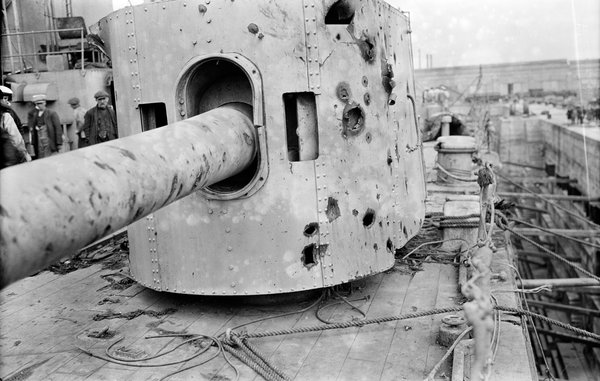
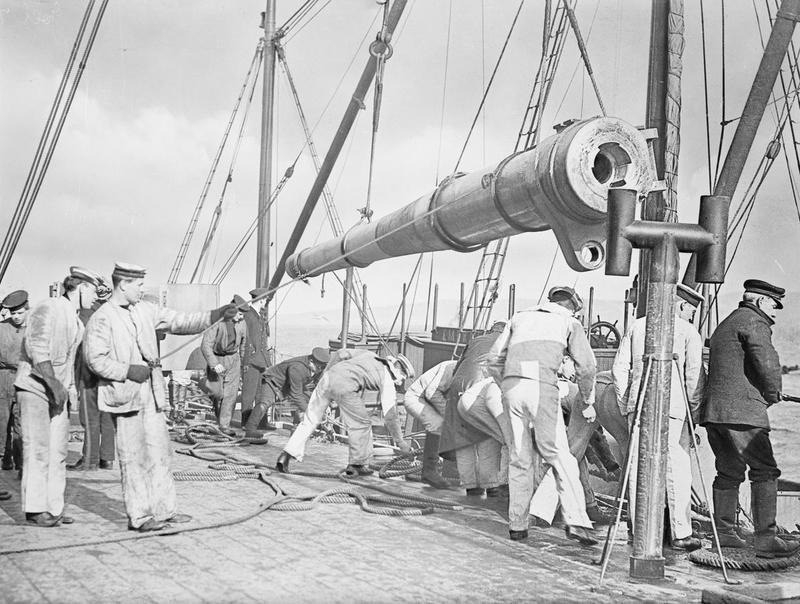
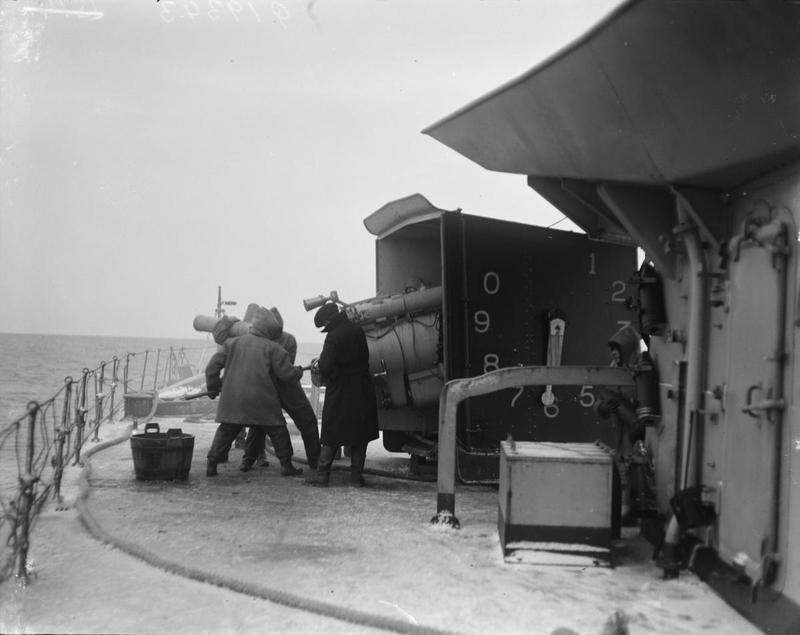
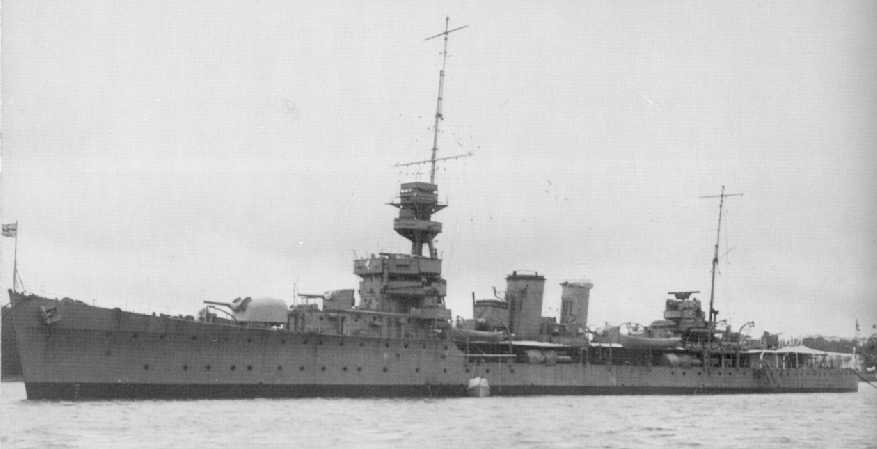
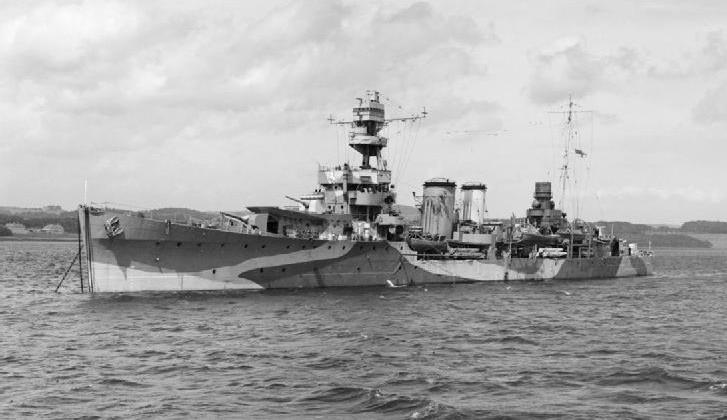
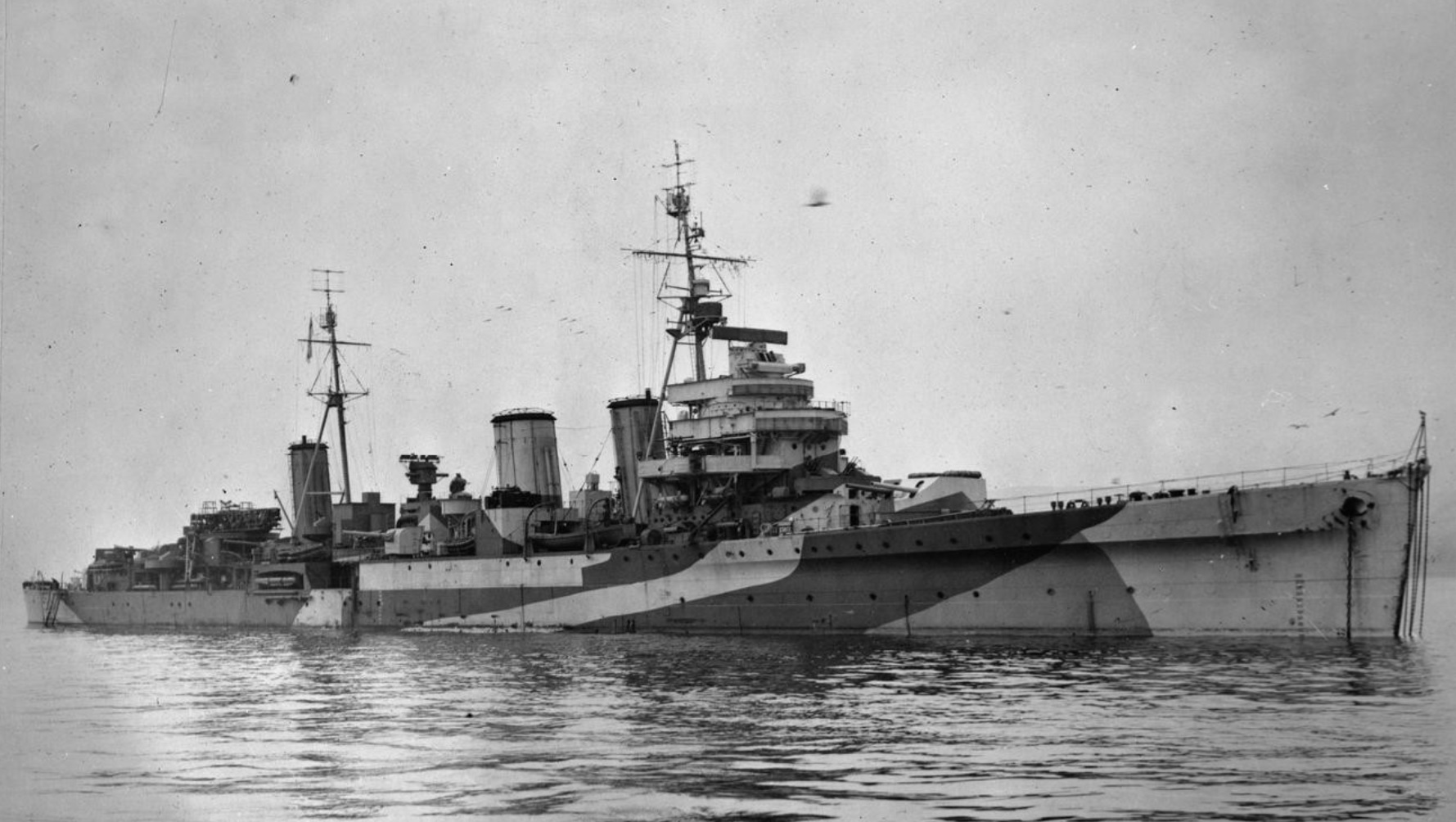
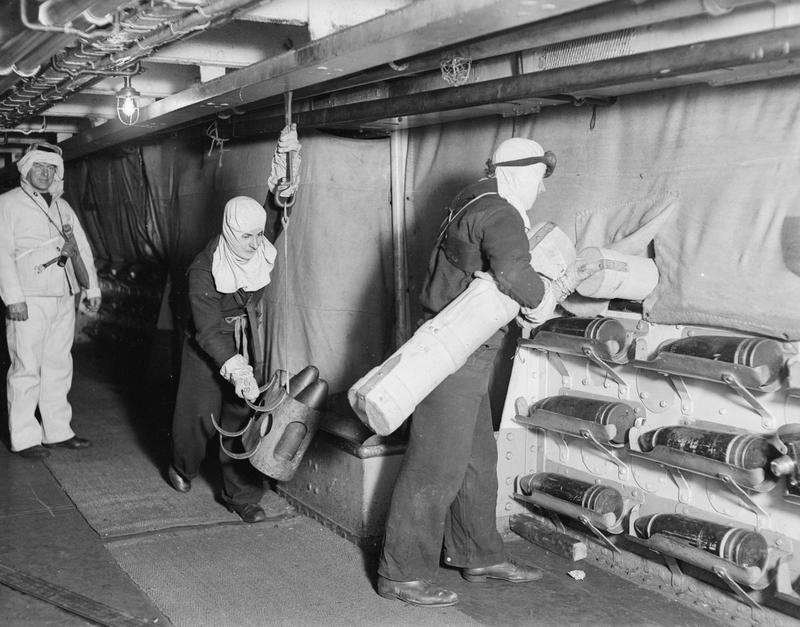
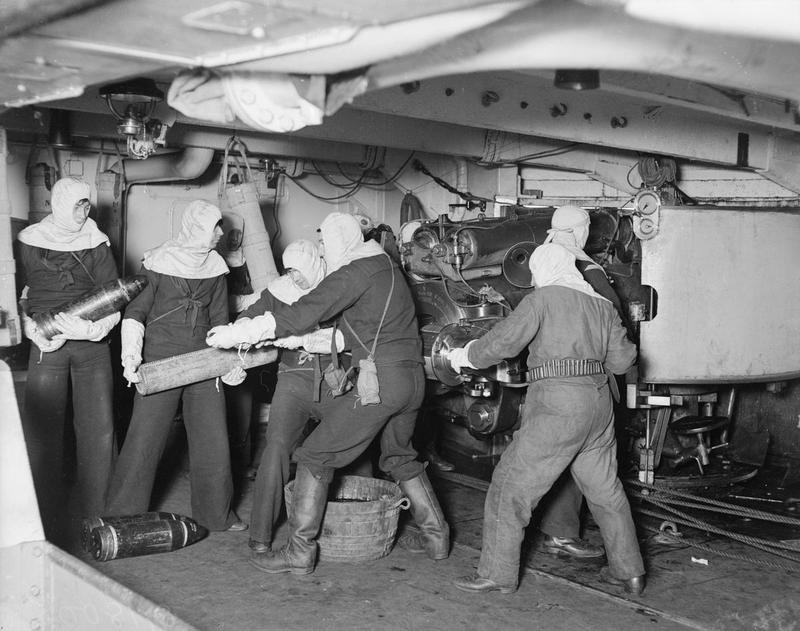
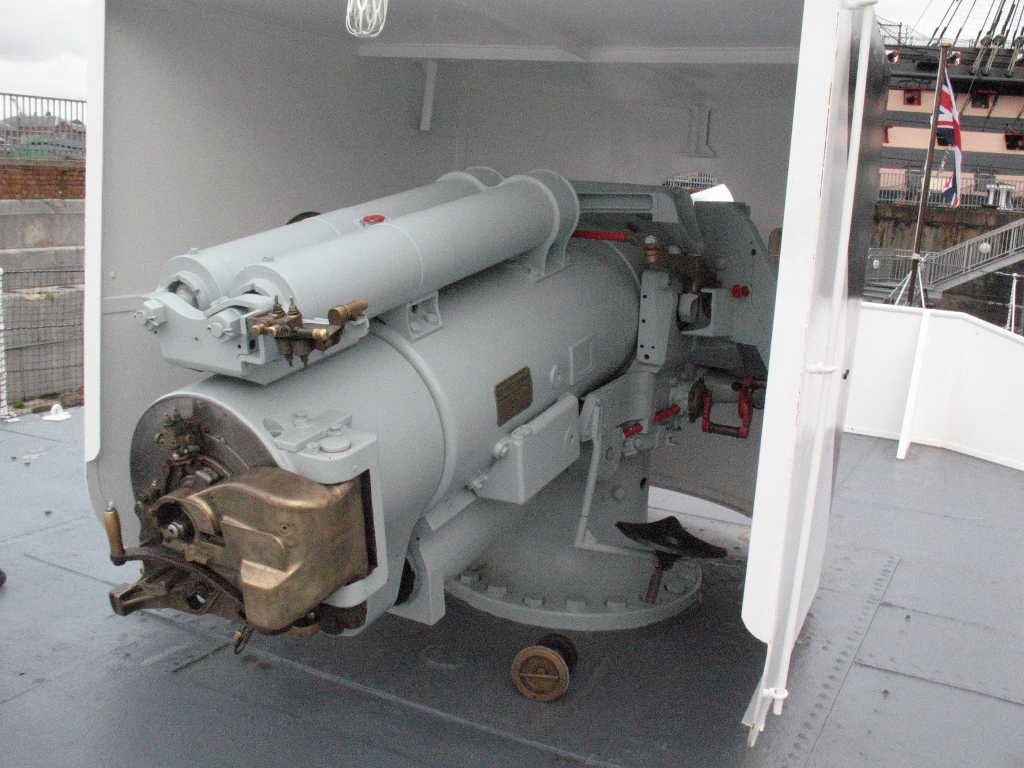
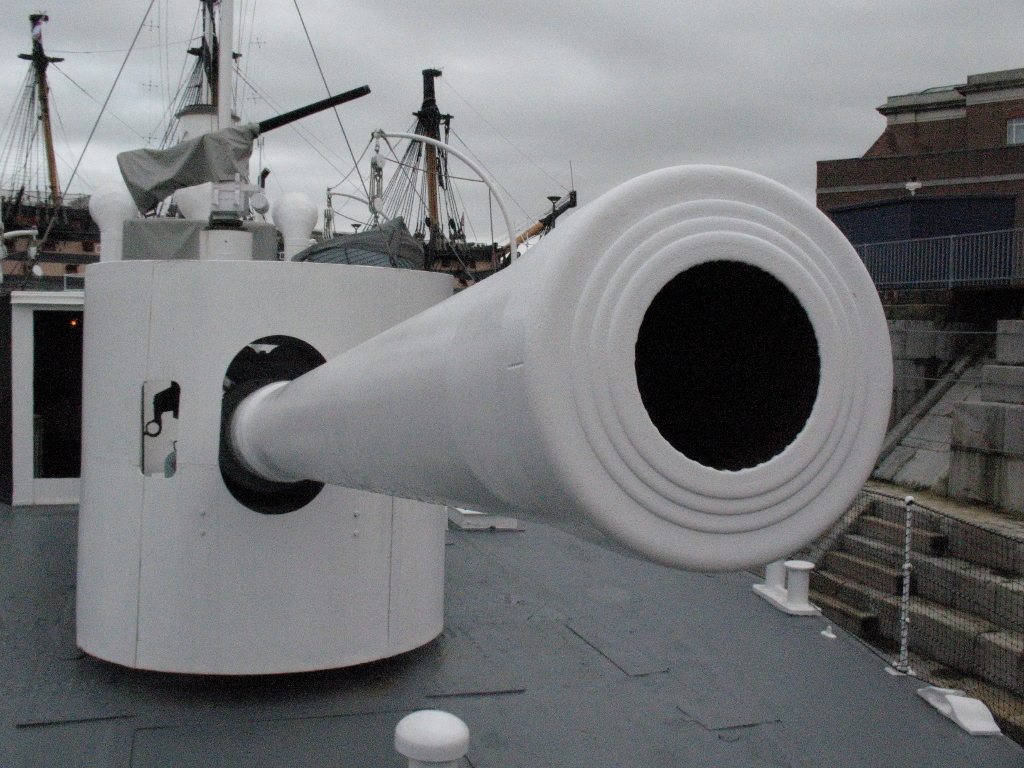
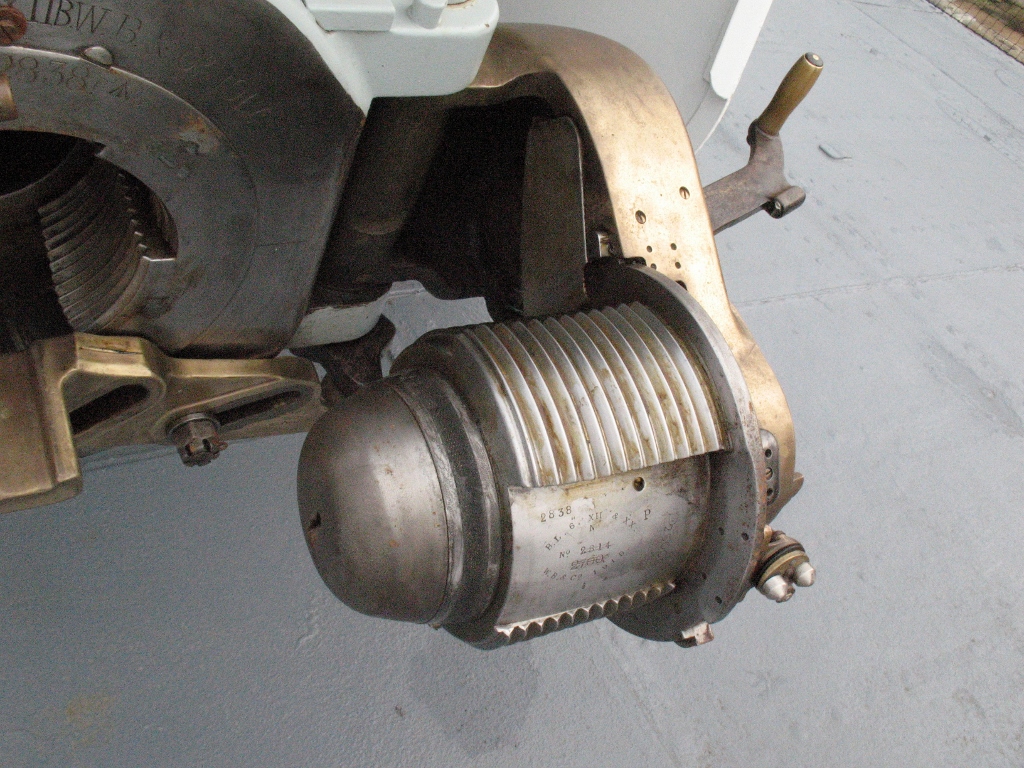
Images at The Vickers Photographic Archive
Test results of 6" (15.2 cm) CPBC against 1" (2.254 cm) armor: 4645
"Warrior to Dreadnought: Warship Development 1860-1905" and "The Grand Fleet: Warship Design and Development 1906-1922" both by D.K. Brown
"British Battleships of World War One" by R.A. Burt
"Big Gun Monitors: The History of the Design, Construction and Operation of the Royal Navy's Monitors" by Ian Buxton
"Jutland: An Analysis of the Fighting", "Naval Weapons of World War Two" and "British Naval Guns 1880-1945 No 12" article in "Warship Volume VIII" all by John Campbell
"Cruisers of the Royal and Commonwealth Navies" by Douglas Morris
"British Battleships of World War Two" and "British Cruisers of World War Two" both by Alan Raven and John Roberts
"A Concentrated Effort: Royal Navy Gunnery Exercises at the End of the Great War" article by William Schleihauf in "Warship International" No. 2, 1998
"Cruisers of World War Two" by M.J. Whitley
---
"History of the Gun" by Mr. Ruffell
07 January 2007 - Benchmark
30 January 2009 - Added information regarding 45 caliber vs. 50 caliber, added ready-use information note, added number
of mounts used for each ship class, added mounting and ammunition supply information for Queen Elizabeth and Royal Sovereign
classes, added information on mounts used for coastal batteries and experimental work
28 November 2012 - Minor changes
22 February 2013 - Added notes about use as secondary armament, added photograph of HMS Warspite mounting
03 February 2014 - Added photograph of HMS Diomede as a training ship
04 February 2014 - Modified mounting note regarding forecastle guns on Queen Elizabeth class, modified mounting note regarding HMS Diomede
02 May 2014 - Added photograph of HMS Calypso
05 October 2014 - Added photograph of gun being removed from HMS Queen Elizabeth
24 October 2015 - Corrected typographical errors
30 November 2015 - Changed Vickers Photographic Archive links to point at Wayback Archive
19 March 2016 - Added photographs from J. Owen Zurhellen
30 August 2016 - Converted to HTML 5 format
22 April 2019 - Reorganized notes
05 September 2021 - Added photograph of HMS Enterprise
25 September 2023 - Added to caption for HMS Calypso
15 September 2025 - Redid photographs
29 October 2025 - Added Note regarding the rearming of HMS Delhi with USN weapons and fire control equipment
05 January 2026 - Added to note regarding the rearming of HMS Diomede