
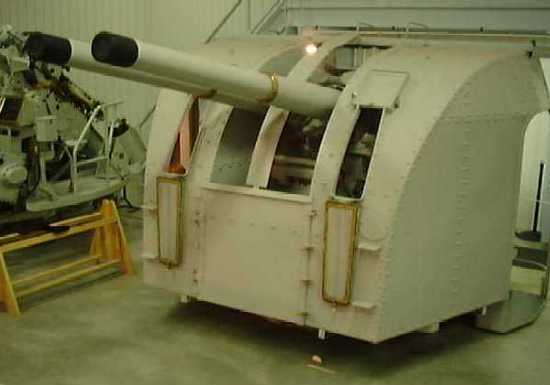
Intended for use as a DP weapon, the Mark XVI was a reasonably good AAA gun although many considered it as being too small for the anti-ship role. This weapon superseded the 4"/45 (10.2 cm) Mark V HA gun on new cruiser construction during the 1930s. In addition, many older cruisers and capital ships had their Mark V guns replaced with these more powerful weapons during refits. A popular weapon, production could not keep up with demand until late in the war, resulting in many ships being armed with older weapons.
HMS Carlisle, a converted AA cruiser armed with these guns, shot down 11 aircraft during the war, the highest score among British cruisers. The Auxiliary AA ship Alynbank, also armed with these guns, shot down six aircraft.
These guns were noteworthy as having "neither long barrel life nor particularly high accuracy" - John Campbell. This was blamed on the use of projectiles with a too-short parallel section which led to poor centering at the muzzle.
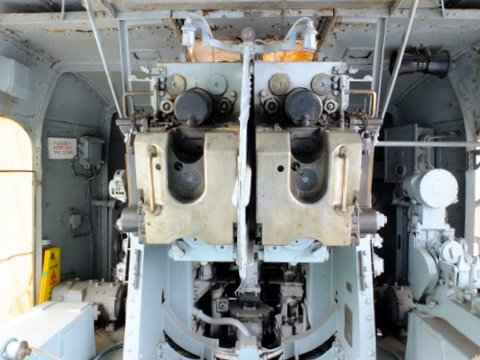
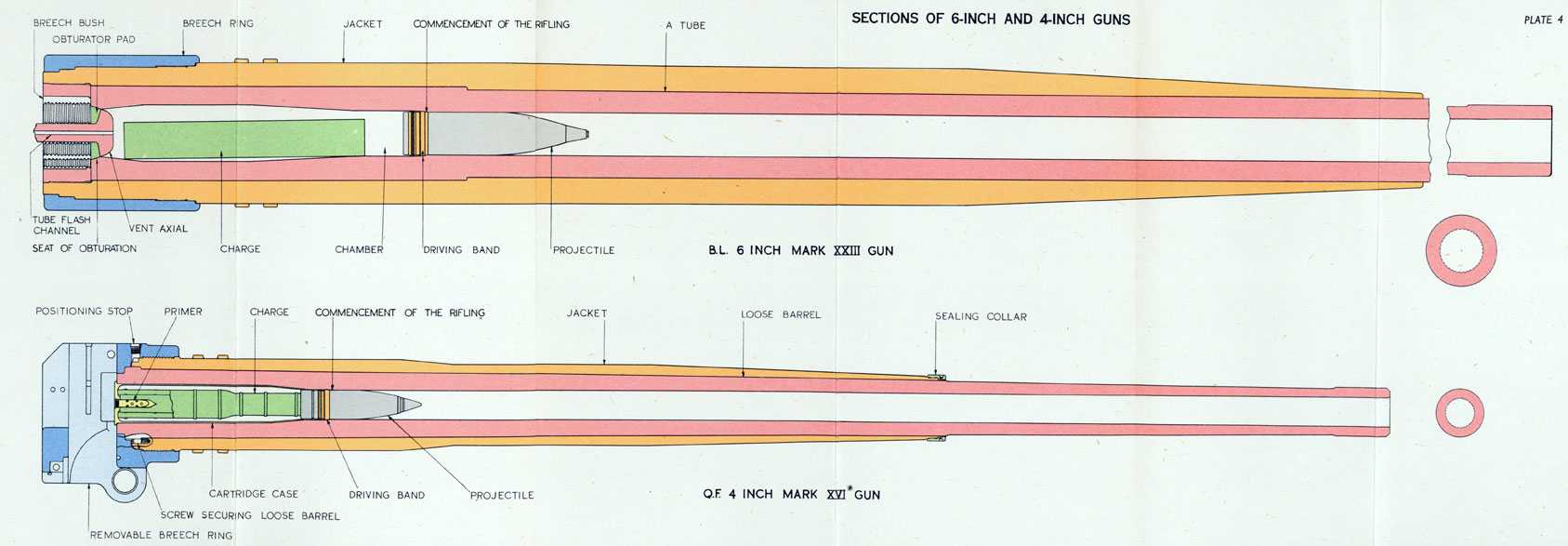
Guns could be operated in either Quick Firing (QF) or Semi-Automatic (SA) mode. In QF mode, the breech was manually opened after firing by moving a lever which also ejected the spent casing. In SA mode, the breech would open automatically after firing and eject the spent casing. During loading, the breech mechanism would close automatically when the cartridge rim hit the ejectors.
The original Mark XVI had an A tube, jacket from muzzle to removable breech ring and used a down-sliding breech block. The Mark XVI* was the most produced version and differed by having the A tube replaced by an autofretted loose barrel with a sealing collar at the front of the jacket. Worn-out Mark XVI guns when repaired were converted to the Mark XVI* standard.
The Mark XVII was designed for some "County" class cruisers with the intention of replacing two of their single 4"/45 (10.2 cm) Mark V mountings with twin mountings without exceeding the Treaty weight limits. This hair-splitting exercise was described as "ridiculous punctiliousness" by John Campbell. Twelve guns were manufactured, all of which were later converted back to the Mark XVI standard. The Mark XVIII was the original designation for an improved version of the Mark XVI but this was redesignated as the Mark XVI* before being accepted into service. The Mark XXI was a lighter version built to revised design rules with an autofretted monobloc barrel and removable breech ring.
Some 2,555 Mark XVI and XVI* guns along with 238 Mark XXI guns were manufactured in Britain. Canada produced 504 Mark XVI* and 135 Mark XXI guns. Australia built a further 45 Mark XVI* guns.
| Designation | 4"/45 (10.2 cm) QF Mark XVI and XVI*
4"/45 (10.2 cm) QF Mark XVII 4"/45 (10.2 cm) QF Mark XXI |
|---|---|
| Ship Class Used On | Capital Ships: Barham, Malaya, Warspite, Royal Sovereign class and Hood
Monitors: Roberts class Aircraft Carriers: Furious, Unicorn, Activity, Campania and Nairana classes Cruisers: All 8 inch (20.3 cm) cruisers except HMAS Canberra and HMS York, 6 inch (15.2 cm) cruisers built after 1930 except HMAS Sydney, "C" class as converted to AA cruisers and Abdiel minelayers Destroyers - Main Armament: "Hunt" and "Weapon" classes, Canadian "Tribal" class destroyers, "L" class destroyers Lance, Legion, Lively and Gurkha, "P" class destroyer Petard Destroyers - AA Armament: "Tribal" class Australian and Canadian "River" class frigates Australian warships Parramatta, Warrego, Bathurst and Kanimbla Most sloops, auxiliary AA ships, AMCs, some landing ships, depot ships and netlayers 1938 - 1948 Netherlands: Cruiser Jacob van Heemskerck and Destroyer Isaac Seers Poland: Destroyer Blyskawica as rearmed |
| Date Of Design | About 1934 |
| Date In Service | 1936 |
| Gun Weight | Mark XVI: 4,495 lbs. (2,039 kg)
Mark XVI*: 4,502 lbs. (2,042 kg) Mark XXI: 3,397 lbs. (1,541 kg) |
| Gun Length oa | 190.5 in (4.839 m) |
| Bore Length | 180.0 in (4.572 m) |
| Rifling Length | 149.5 in (3.798 m) |
| Grooves | (32) 0.037 in deep x 0.270 (0.94 x 6.86 mm) |
| Lands | 0.1227 in (3.117 mm) |
| Twist | Uniform RH 1 in 30 |
| Chamber Volume | 511.8 in3 (8.387 dm3) |
| Rate Of Fire | 15 - 20 rounds per minute |
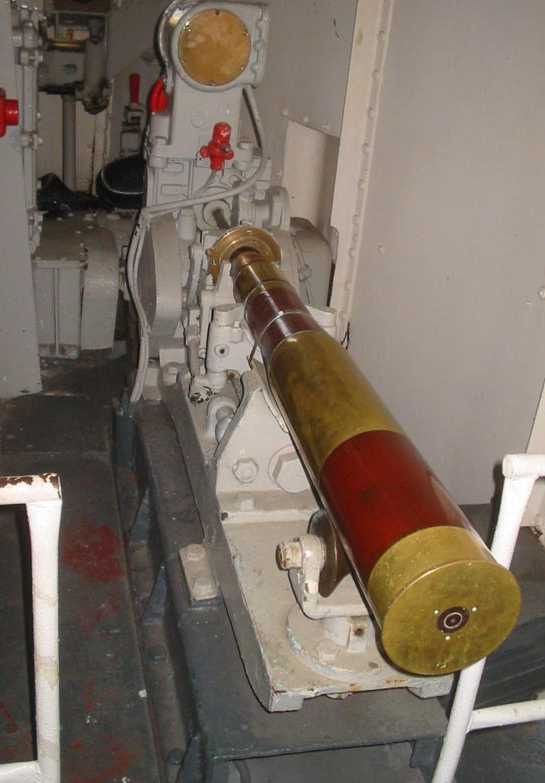
| Type | Fixed |
|---|---|
| Weight of Complete Round | HE: 63.5 lbs. (28.8 kg)
SAP: 66.75 lbs. (30.28 kg) |
| Projectile Types and Weights | HE Mark 19: 35 lbs. (15.88 kg)
SAP: 38.25 lbs. (17.35 kg) |
| Bursting Charge | N/A |
| Projectile Length | N/A
Complete round was 45.13 in (114.6 cm) |
| Propellant Charge | Standard Charge: 9.0 lbs. SC 103 or 10.5 lbs. NF/S (4.09 or 4.8 kg)
Reduced Charge: 5.1 lbs. SC 061 (2.3 kg) Cartridge: 28.5 lbs. (12.9 kg) |
| Muzzle Velocity 1 | Standard Charge: 2,660 fps (811 mps)
Reduced Charge: 2,000 fps (610 mps) |
| Working Pressure | 20.5 tons/in2 (3,230 kg/cm2) |
| Approximate Barrel Life | 600 rounds |
| Magazine capacity per gun 2 | Hood, Barham, Malaya and Warspite: 250 to 280 rounds plus 250 total star shells
Most Cruisers: 200 rounds Edinburgh: 250 rounds 3 Roberts: 400 rounds 4 |
- ^The sources below differ as to the muzzle velocity and range of these weapons. I have chosen to use those given in "Naval Weapons of World War Two."
- ^Outfits included SAP, HE, shrapnel and star shells.
- ^Outfit on Edinburgh per gun was 250 HE, 65 practice HA, 4 practice LA, 4 Target smoke and 12.5 starshells.
- ^Outfit on Roberts per gun was 80 SAP, 320 HE, 12 star and 83 practice.
- HE rounds were time-fuzed for AA work. Pre-war, the RN regarded bursts within 100 feet (30 m) as being 'effective', but postwar experiments showed that a 4in shell bursting at 45 feet (14 m) only had a 15 per cent chance of a kill, over quite narrow zones.
| Elevation | With 35 lbs. (15.9 kg) HE Shell |
|---|---|
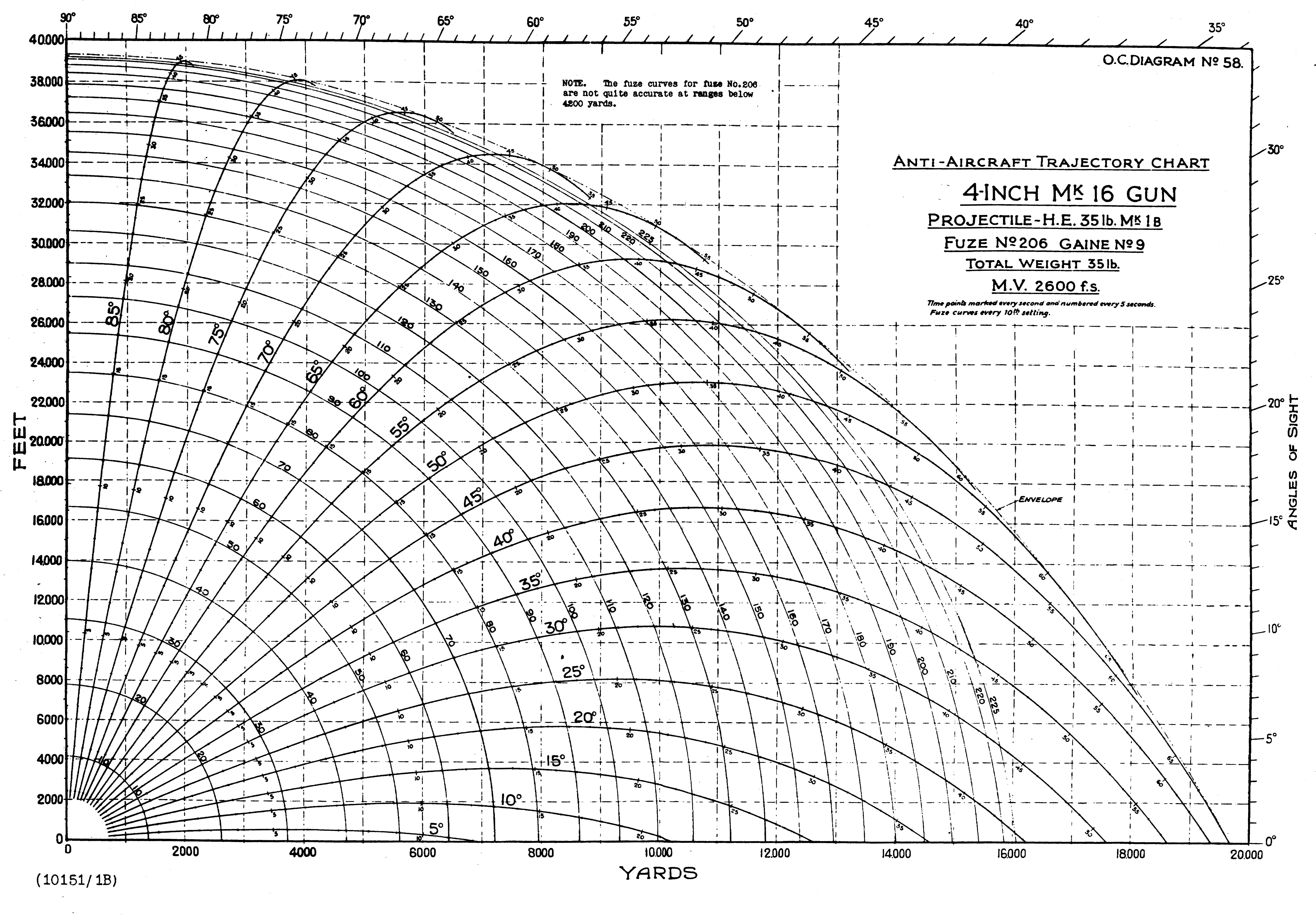
| Range @ 45 degrees | 19,850 yards (18,150 m) |
| AA Range @ 80 degrees | 39,000 feet (11,890 m) |
See Range Sketch below for additional information.
| Designation | Twin HA/LA Mount 1a
2a:
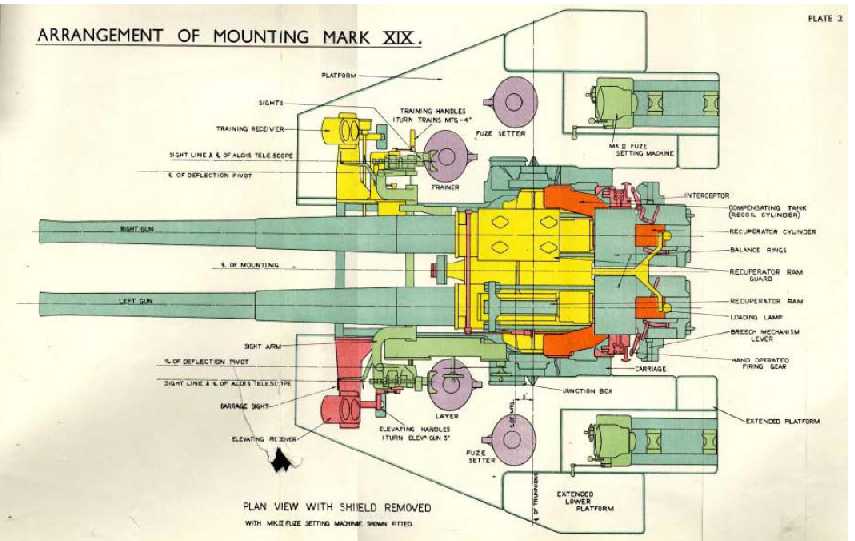
Mark XIX 3a: Capital Ships: Barham (4), Malaya (4), Warspite (4), Royal Sovereign class (4), Hood (7) Monitors: Roberts class (4) Carriers: Furious (6), Unicorn (4), Activity (1), Campania (2), Nairana (2), Vindex (2), Pretoria Castle (2) County Cruisers: Kent class (4) except Suffolk (2) and Canberra (0), London class (4), Norfolk class (4), Exeter (2) Small Cruisers: Leander class (4), Perth (4), Hobart (4), Arethusa class (4) Town Cruisers: Southampton class (4), Edinburgh class (6) 4a Colony Cruisers: Fiji class (4), Ceylon class (4), Swiftsure class (4) Old Cruisers: Danae (1), Effingham (4) AA Cruisers: Cairo (4), Calcutta (4), Carlisle (4), Curacoa (4), Caledon (3), Colombo (3) Cruiser/Minelayers: Abdiel class - First Group (3) as rearmed; Abdiel class - Second Group (2) as built Destroyers: "Tribals" (1), "P" class Petard (2), "L" class Lance (4), Gurkha (4), Legion (4) and Lively (4) Destroyers: Canadian "Tribals" Cayuga (4), Athabaskan (4) Old Destroyers: Wallace (2), some "V" class (2) and "W" class (2) Escort Destroyers: Hunt Type I (2), Hunt Type II (3), Hunt Type III (2), Hunt Type IV (3) Frigates: "Bay" class (2), Canadian "River" class (1), Late Australian "River" Class (2) Sloops: Fleetwood (1), Egret class (4), Black Swan class (3), Australian Parramatta (1) AMC: Canton (2), Corfu (2) Sea-going Auxiliary AA ships: Alynbank (4), Springbank (4), Foylebank (4), Palomares (3), Pozarica (4) Sea-going Auxiliary AA ships: Tynwald (3), Ulster Queen (3), Canadian Prince Robert (5) LSH (L): Bulolo (2), Lothian (2) LSI (L): Glenearn (3), Glengyle (3), Glenroy (3) LSI (M): Prince David (1), Prince Henry (1) Submarine Depot Ships: Bonaventure (1), Montclare (2), Wolfe (2) Netlayers: Guardian (1), Protector (1) Netherlands: Jacob van Heemskerck (5) and Isaac Seers (3) Poland: Blyskawica (4), Dragon (1) and Conrad (ex-HMS Danae) (1)
RP 50 Mark XIX conversions:
RP 51 Mark XIX conversions:
RP 52 Mark XIX conversions:
Single HA/LA Mounts 5a:
|
|---|---|
| Weight | Mark XIX: 37,072 lbs. (16,816 kg)
Mark XIX*: About 39,300 lbs. (17,826 kg) Mark XIX+: About 36,000 lbs. (16,333 kg) Mark XX: 22,064 lbs. (10,008 kg) Mark XXIV: 19,039 lbs. (8,636 kg) |
| Elevation | All: -10 / +80 degrees |
| Elevation Rate 2a | As completed, most mountings were manually operated, only
Mountings converted to RP 50: 15 degrees per second Mountings converted to RP 51 and RP 52: 20 degrees per second |
| Train | 340 degrees |
| Train Rate 2a | As completed, most mountings were manually operated, only
Mountings converted to RP 50: 15 degrees per second Mountings converted to RP 51 and RP 52: 20 degrees per second |
| Gun recoil | 15 in (38 cm) 6a |
- ^
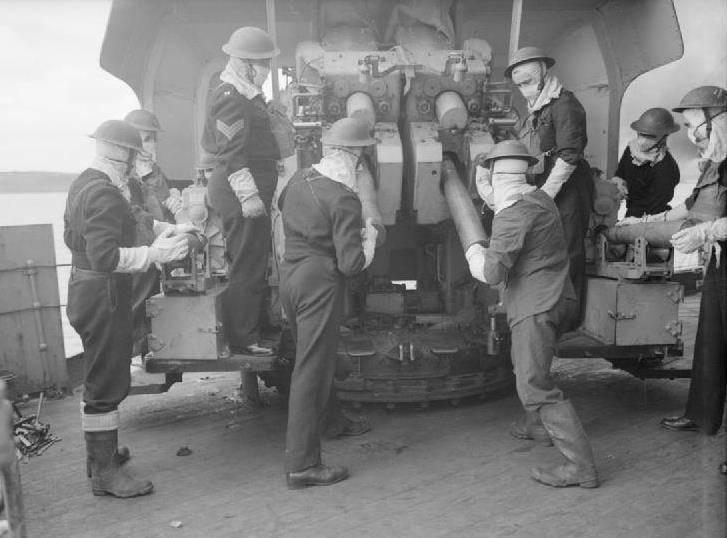
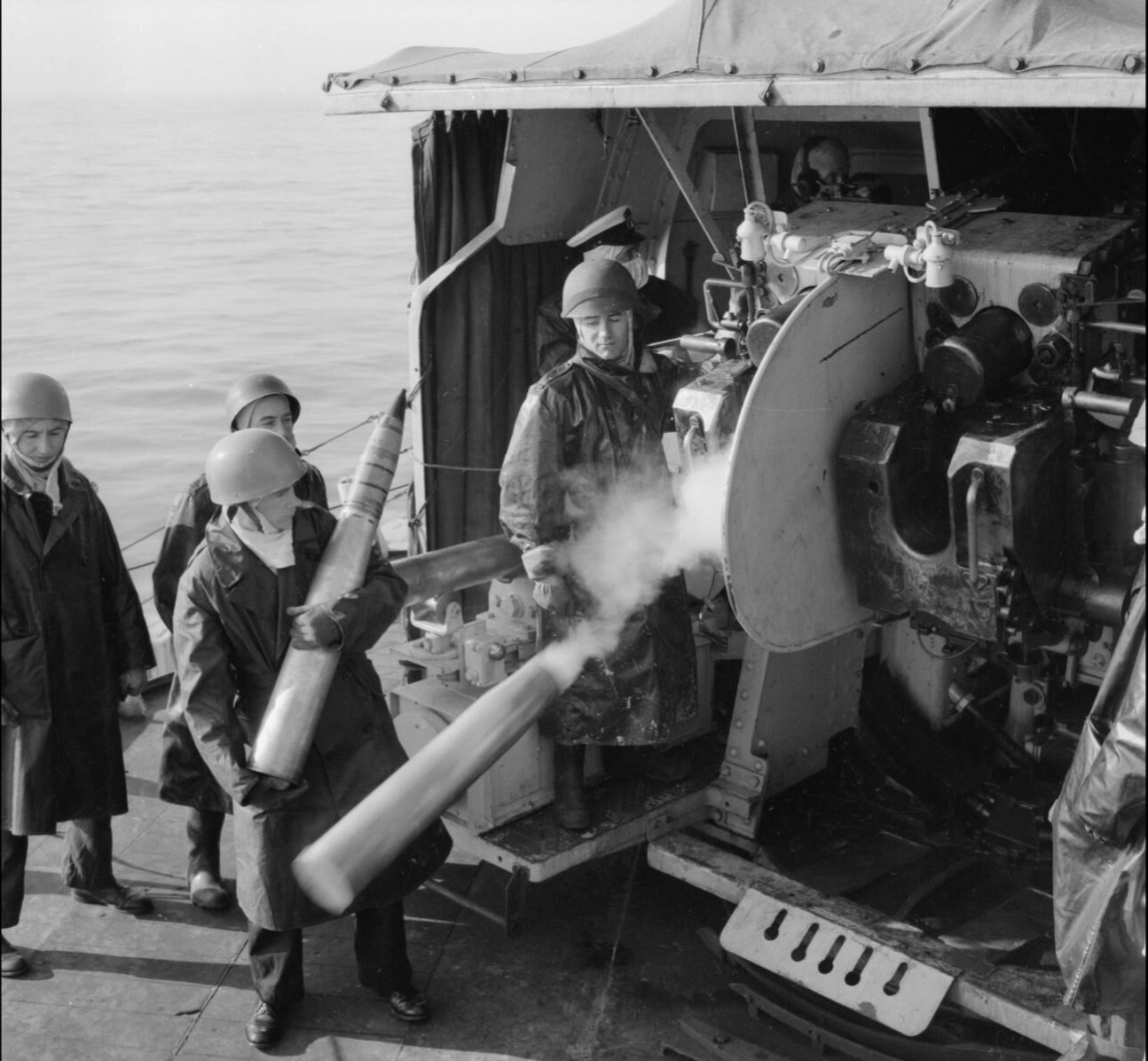
Many older battleships and cruisers traded their single 4" (10.2 cm) Mark V guns for the Mark XIX twin mountings during the 1930s and early 1940s refits. HMS Hood had four twin mountings added in 1937 and three more twin mountings added in 1940, at which time all of her 5.5" (14 cm) single mountings were removed.
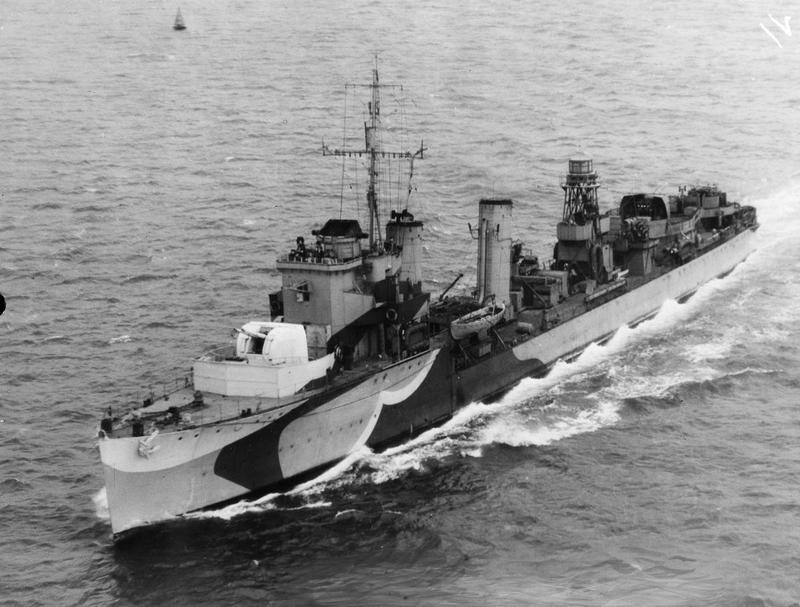
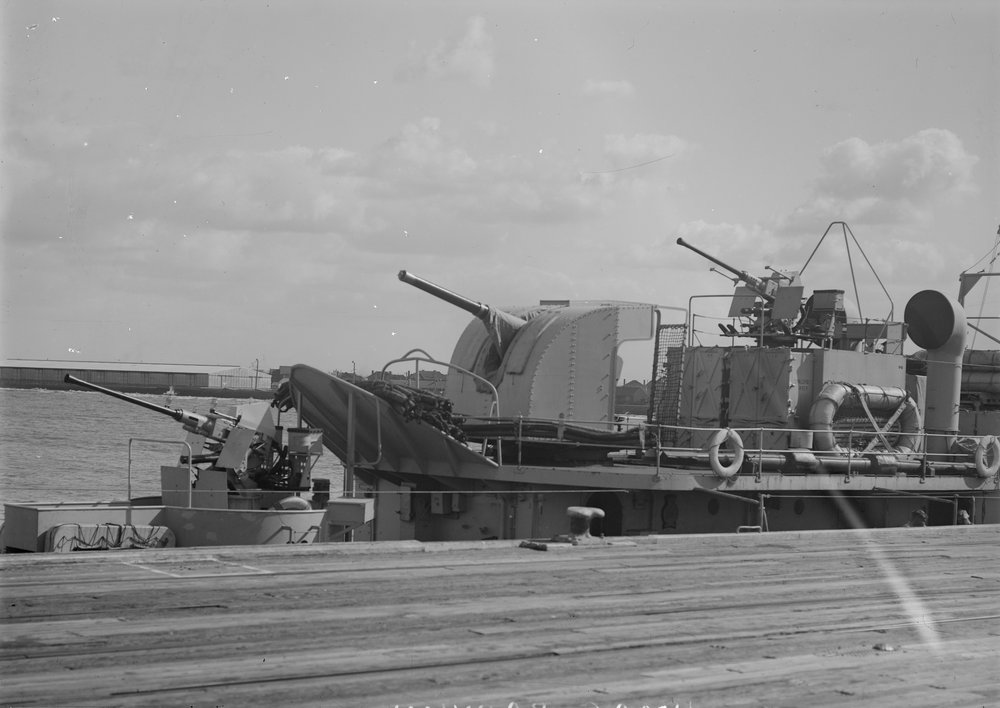
British "Tribal" class destroyers had their "X" position 4.7" (12 cm) twin mounting replaced with one Mark XIX twin mounting. The first Abdiel group had their three 4.7"/45 (12.7 cm) Mark CPXIX twin mountings replaced by three Mark XIX twin mountings. The Hunt Type I destroyers were originally intended to mount three Mark XIX twin mountings, but an error in stability calculations left them with too much top weight, resulting the removal of "X" mounting. Most of the later Hunt types carried three Mark XIX twin mountings. HMS Petard was originally armed with four 4" (10.2 cm) Mark V guns in single mountings and was rearmed with two Mark XIX twin mountings during the war. The post-war "Weapon" class destroyers had three RP 51 Mark XIX twin mountings as completed, although one was later removed in order to add Squid ASW.
The old cruiser HMS Danae had a twin Mark XIX mounting added to her after superstructure in 1942. In a similar fashion, the cruiser HMS Dragon while under Polish control had a Mark XIX twin mounting added during her April - May 1944 refit. HMS Belfast had two Mark XIX twin mountings removed in 1944 - 45 as weight compensation for growth in other areas.
The fighter director ships HMS Palomares and HMS Ulster Queen had their three Mark XIX twin mountings replaced by three single 6" (15.2 cm) guns (type unknown) during the war.
The Polish destroyer Blyskawica had her 120 mm guns replaced in 1941 with four Mark XIX twin mounts. In some sources it is claimed that these were replaced in the 1950s and she was then rearmed with Russian 100 mm guns, but an examination of the museum ship shows that she still carries her British 4" (10.2 cm) guns.
- ^2.12.22.3As built, almost all twin mountings were manually operated. As noted above, many larger ships and a few smaller ones were fitted with RPC during the war, there being three Metadyne types, RP 50, RP 51 and RP 52. All three had the elevating and training motors on the mountings and drove the mounting through worm gears. RP 50 and RP 52 had the Metadyne sets on the fixed structure while RP 51 had them on the rotating mass. RP 51 and RP 52 had joysticks for local control.
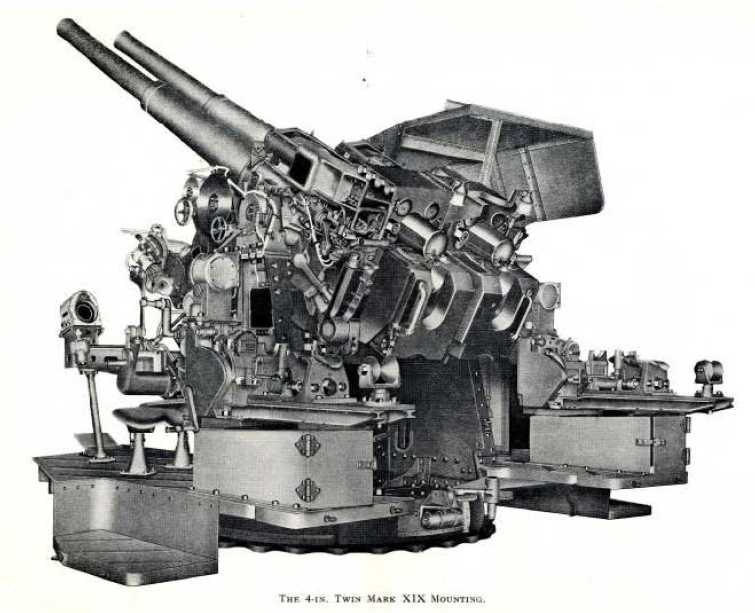
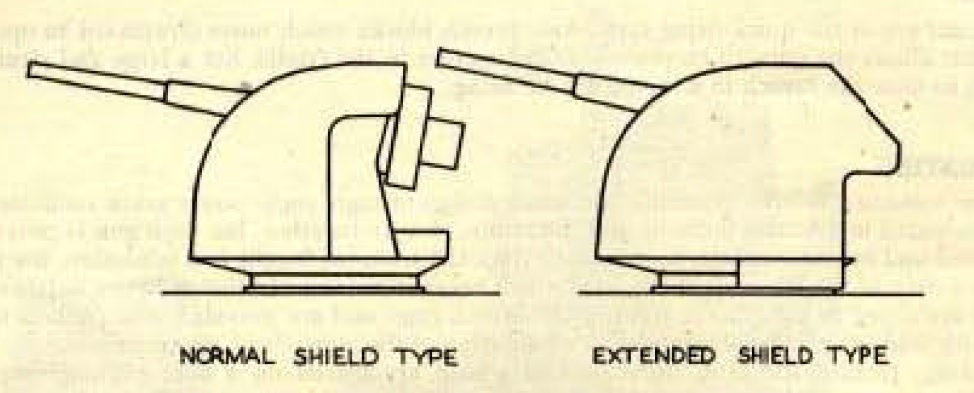
- ^The Twin Mark XIX mounting had three variations: The standard Mark XIX had a relatively short shield which left the loaders exposed to shell fragments; the Mark XIX* had an extended shield and was used on ships with off-mount blast structures; and the Mark XIX† which lacked fuze setting machines. See sketch below.
- ^The Edinburgh class cruisers had an unusual design feature in that their 4" (10.2 cm) guns were positioned well back from the secondary magazines, which were located under the flight deck. To transport the ammunition from the magazine hoists back to the guns, these ships were equipped with a 110 foot (33.5 m) conveyor system which consisted of trolleys on a sort of railway. "British Cruisers of World War Two" describes these as being "a complicated arrangement which in action could easily be disrupted."
- ^The Mark XX single mounting was used only on Australian ships. The Mark XXI gun in the Mark XXIV single mounting was a late-war development intended for "Loch" class frigates and "Castle" class corvettes but only Loch Veyatie, completed after the war, actually carried this gun and mounting.
- ^The recoil distance given above is the nominal figure. The absolute, metal-to-metal recoil distance was 16.5 in (42 cm).
- The gun axes were 21 in (53.3 cm) apart on the Twin Mark XIX.
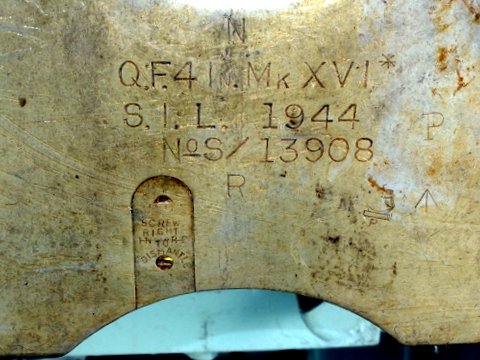
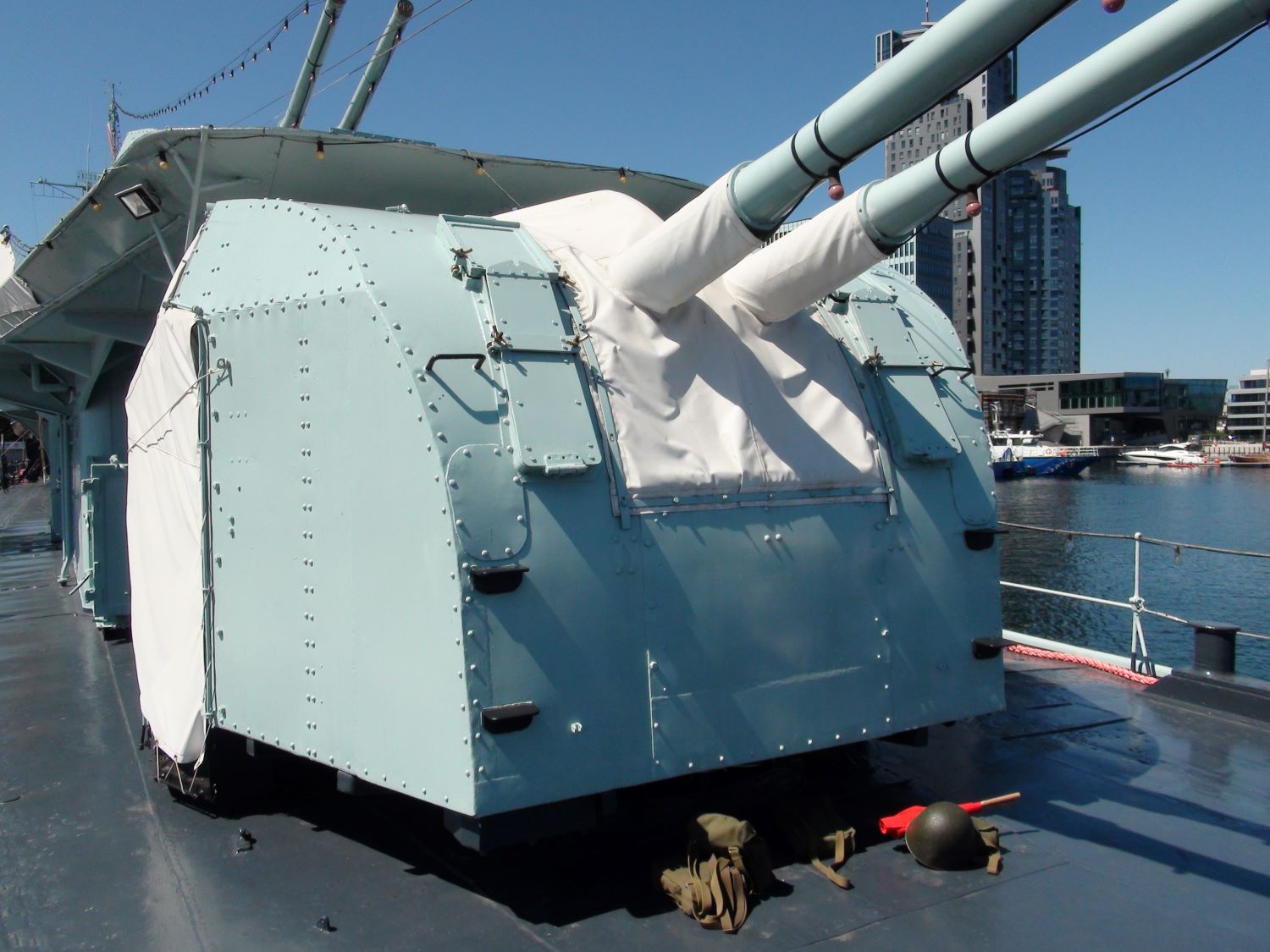
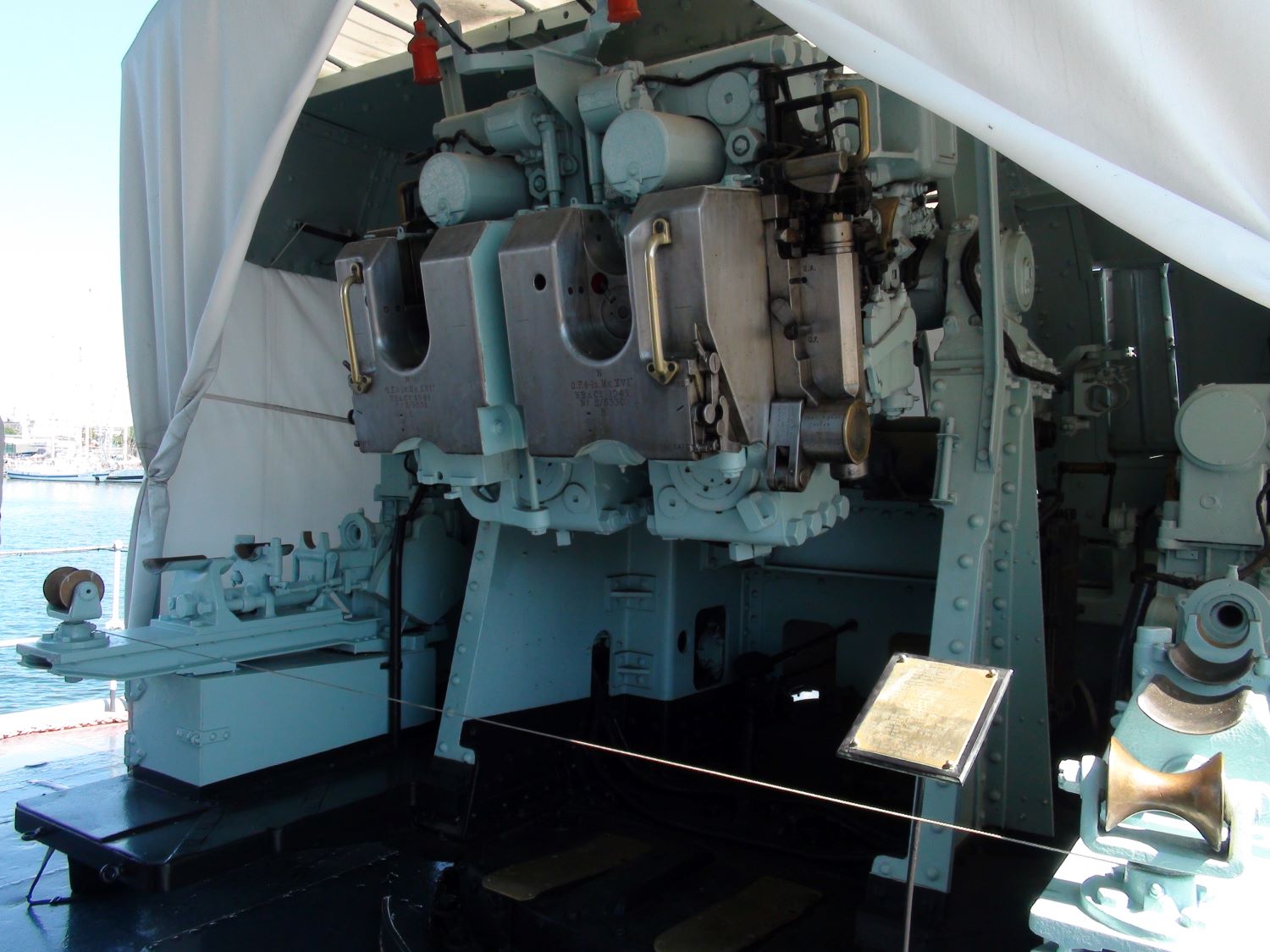
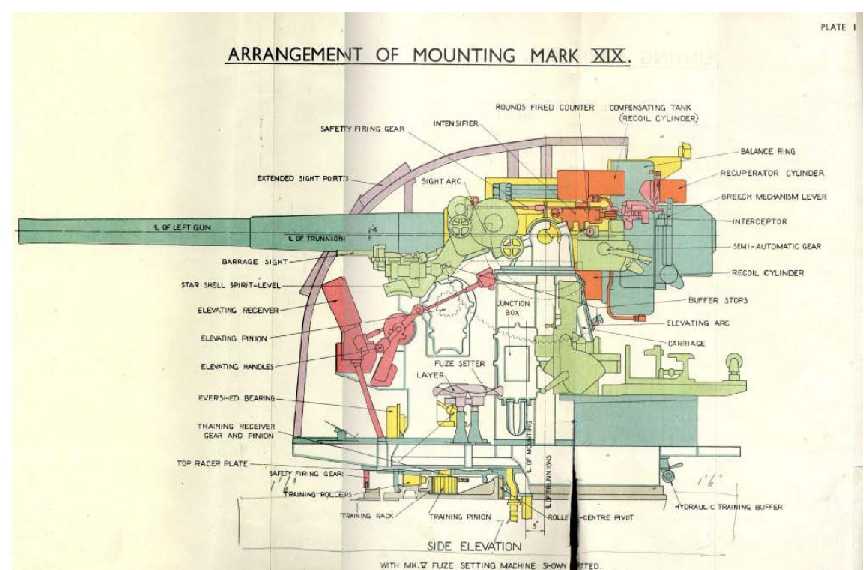

XIX Elevation at the The Vickers Photographic Archive. Note the projectile in the fuze-setting machine in photograph 4879 and that photograph 4944 is not for these weapons.
"The Design and Construction of British Warships 1939-1945 Vol.1 - Major Surface Warships" by D.K. Brown
Big Gun Monitors: The History of the Design, Construction and Operation of the Royal Navy's Monitors" by Ian Buxton
"Naval Weapons of World War Two" and "British Naval Guns 1880-1945 No 18" article in "Warship Volume X" both by John Campbell
"The Hunts" by John English
"British Carrier Aviation: The Evolution of the Ships and their Aircraft" by Norman Friedman
"Destroyer Weapons of World War 2" by Peter Hodges and Norman Friedman
"Warships of World War II" by H.T. Lenton and J.J. Colledge
"Cruisers of the Royal and Commonwealth Navies" by Douglas Morris
"British Battleships of World War Two" and "British Cruisers of World War Two" both by Alan Raven and John Roberts
"Anatomy of the Ship: The Battlecruiser Hood" by John Roberts
"Cruisers of World War Two: An International Encyclopedia" by M.J. Whitley
---
"HACS: A Debacle or Just-in-Time?" by Peter Marland
---
"Handbook for the 4 Inch Q.F. Mark XVI* Gun on the H.A. Twin Mark XIX and Single Mark XX Mountings" BR 257 1941 at Historic Naval Ships Association
28 October 2007 - Benchmark
24 September 2011 - Added HMS Edinburgh ammunition outfit
16 June 2012 - Added picture of HMAS Barwon
20 January 2013 - Added sketches of Mark XIX twin mounting
18 May 2013 - Added photograph of HMCS Haida
05 January 2014 - Added photograph of HMS Berwick
21 September 2014 - Minor changes and additional information regarding RP conversions and HMS Danae and HMS Dragon
29 November 2015 - Changed Vickers Photographic Archive links to point at Wayback Archive
16 January 2016 - Added photograph of HMS Wallace
25 September 2018 - Converted to HTML 5 format, reorganized notes, added sketch of Mark XIX and XIX* shields
31 August 2019 - Added comments about breech mechanism in QF and SA modes
06 May 2020 - Added range sketch
25 February 2022 - Reworked description of Q.F./S.A. breech mechanism
20 May 2023 - Added Netherlands warships
05 May 2024 - Added photograph of HMS Loch Ruthven
26 March 2025 - Added photographs of mounting on Blyskawica
09 November 2025 - Added photograph of HMS Crossbow